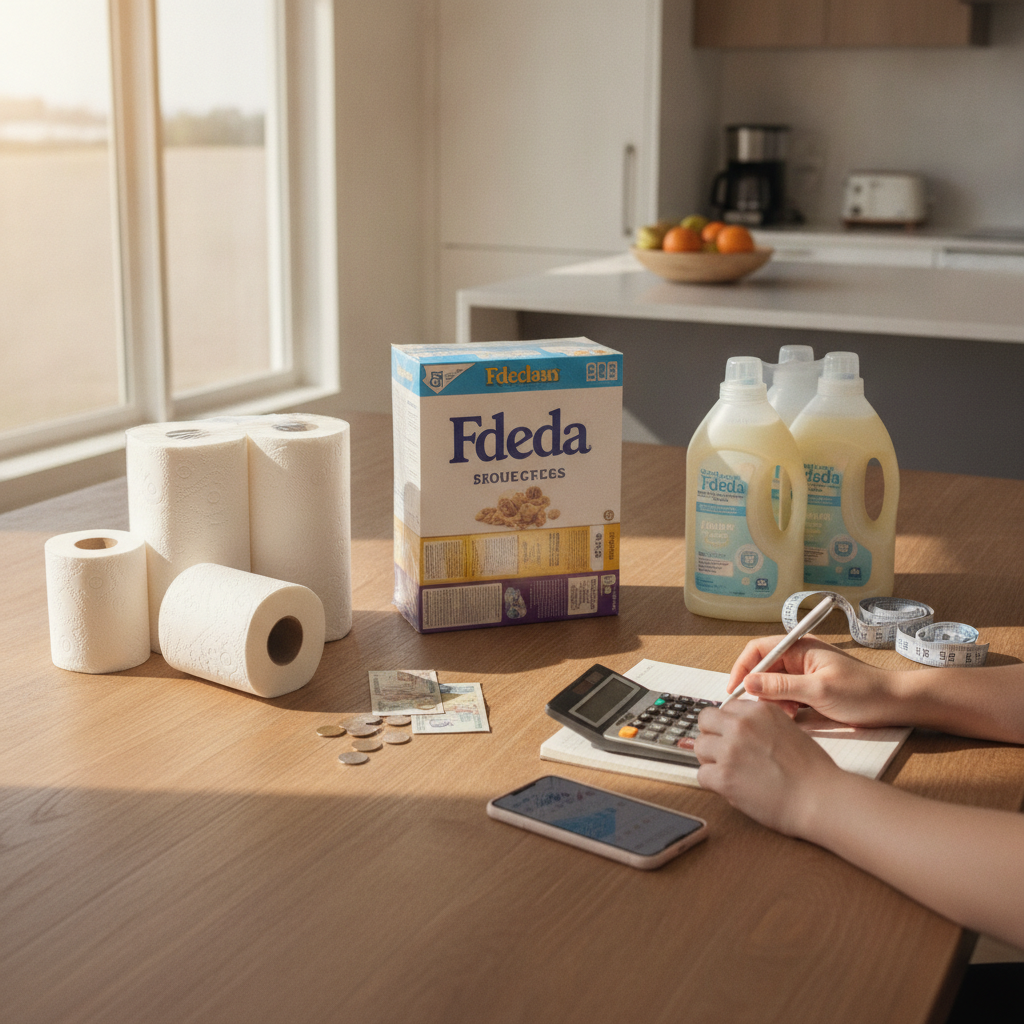
Bundled pricing is one of the most effective tools retailers use to make you feel like you're saving money — even when you're not. Whether it's a three-pack of shampoo at Costco, a multi-item kit on Amazon, or a "buy two, get one" offer at Target, the bundle format creates an impression of value that isn't always backed by the numbers. Before you load up your cart, it's worth taking a few minutes to run the actual math.
Calculate the True Cost Per Unit First
The most important step is dividing the total bundle price by the number of units inside. A 12-pack of paper towels priced at $18 costs $1.50 per roll. A 6-pack of the same brand at $8.40 costs $1.40 per roll — making the "bigger" bundle the worse deal. Retailers count on shoppers to skip this step, and most do. Get into the habit of pulling out your phone calculator before assuming that more always means cheaper. Unit price labels on store shelves help, but they're not always consistent in how they display the measurement unit, so verifying independently is smart.
Compare the Bundle to Single-Item Pricing
Once you have your per-unit cost from the bundle, compare it directly against the single-item price. This sounds obvious, but it's frequently skipped. On platforms like Amazon, the individual listing and the bundle listing often coexist, and sometimes the individual item — especially when sold by a third-party seller — is cheaper per unit than the branded bundle. Always check both. The same applies in physical stores, where store-brand singles sometimes undercut the name-brand bundle even at full price.
Watch for Inflated Original Prices in Bundle Listings
Many bundle deals show a crossed-out "original" price next to the sale price to imply dramatic savings. The issue is that the original price is sometimes a suggested retail price that was never consistently charged anywhere. Searching for that item's price history using tools like CamelCamelCamel for Amazon purchases reveals whether the "savings" are real or staged. A bundle that shows 40% off a price that was only ever listed for two days in the past year isn't the deal it appears to be.
Factor In Whether You'll Actually Use Everything
A bundle is only a good deal if you use everything in it. A skincare kit from a brand like The Ordinary might look like strong value on paper, but if two of the four products don't fit your routine, you've effectively paid full price for the two you want and nothing for the rest — which flips the math entirely. Before buying any multi-product bundle, go through each item individually and assess genuine need. Unused products sitting in a cabinet aren't savings; they're spending that didn't deliver value.
Account for Storage Costs and Shelf Life
Bulk and bundle pricing often makes most sense for non-perishable goods with long shelf lives — cleaning products, batteries, printer paper. For food, beauty products, or supplements, expiration dates matter. Buying a six-month supply of protein powder because the bundle price is attractive only works if you'll realistically finish it before it expires or goes stale. Storage space also has a quiet cost. If buying in bulk means renting extra storage or dealing with clutter, the per-unit savings shrink or disappear entirely.
Check If Coupons Apply to Bundles Differently
One underrated factor in bundle math is coupon applicability. Many manufacturer coupons and store promotions apply only to individual items, not bundle packs. At stores like Walgreens or CVS, buying two individual items with coupons can easily beat the bundle price. Check the fine print on any active coupons before defaulting to the bundled version. Stacking a sale price with a store coupon and a manufacturer coupon on single items frequently produces a lower per-unit cost than any bundle on the shelf.
Revisit the Math When Bundles Include "Bonus" Items
Some bundles pad their value with bonus items — a travel-size product, a tote bag, or a free sample — that inflate the perceived value without adding meaningful utility. When calculating per-unit cost, assign honest value only to the items you'd actually buy separately. If a bundle costs $35 and includes $28 worth of products you want plus a $7 item you wouldn't purchase on its own, you're paying for that filler. Stripping out low-value additions gives you a cleaner picture of what the deal is really worth.
Use a Simple Formula Every Time
A repeatable formula makes this process fast and consistent. Divide the total price by the number of units you actually want. Then compare that number to the per-unit cost of the same product bought individually or through a competing retailer. If the bundle wins by more than a few cents per unit and you'll use everything included, it's likely a legitimate deal. If the margin is thin or the math only works with items you don't need, pass on it. Keeping this formula in mind turns every bundle offer into a quick, clear decision.
Bundled pricing isn't inherently manipulative — sometimes it's genuinely the smartest way to buy. But the math has to work in your favor, not just look like it does. Running the per-unit calculation, checking single-item prices, verifying coupon compatibility, and being honest about what you'll actually use gives you real control over whether a bundle saves you money or just feels like it does. Smart shopping isn't about avoiding bundles; it's about knowing when they're worth it.