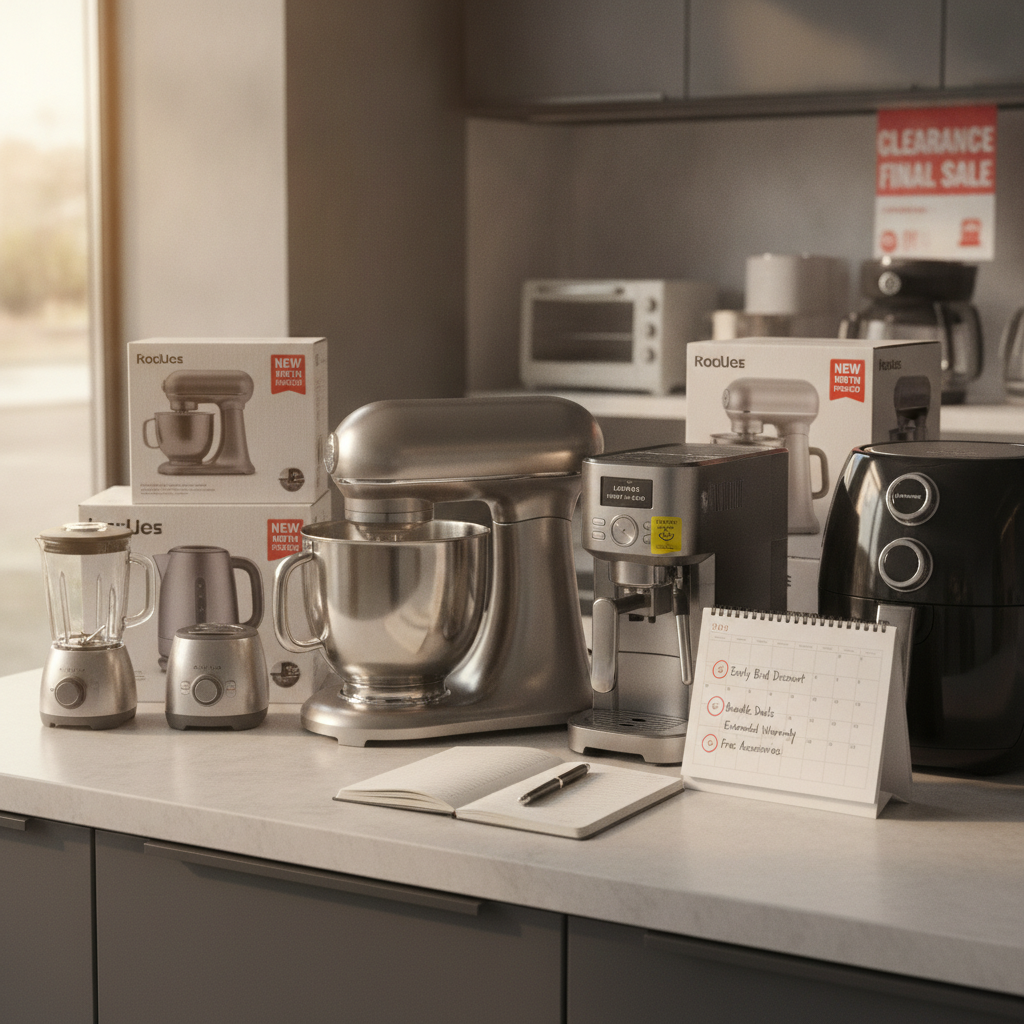
The timing of a kitchen appliance purchase matters far more than most shoppers realize. While conventional wisdom suggests waiting for Black Friday or holiday promotions, there's a strong case to be made for buying small kitchen appliances within the first 90 days of a product launch — a window that consistently offers a different, and often better, kind of value than markdown sales.
What Makes the Post-Launch Window Different From Sale Events?
When a new kitchen appliance hits the market, manufacturers and retailers are working toward the same goal: establishing the product's credibility and building early momentum. This creates conditions that quietly benefit the buyer. Full retail price during a launch period often comes with bundled accessories, extended warranty promotions, or registration bonuses that disappear once the product matures in the market. Brands like Breville and KitchenAid have historically paired initial launch periods with value-adds — such as additional attachments or service extensions — that represent genuine savings without the chaos of a shopping event.
How Early Buyers Often Receive Better Customer Support
Manufacturers prioritize support responsiveness in the early weeks of a product's life cycle, partly because feedback from first buyers shapes their quality control and service protocols. A consumer who purchases a Ninja blender or a De'Longhi espresso machine in the first few months of its release is often dealing with a company that's actively monitoring that product's reception. Return processes tend to move faster, replacement parts ship more reliably, and customer service agents are better trained on the product's specifics. This practical advantage rarely appears on a price tag but adds measurable value over the appliance's lifespan.
Why Sale Prices Don't Always Mean Better Deals
A discounted price at a major retail event can be misleading if the underlying product value has shifted. By the time an appliance reaches a significant markdown, it may be approaching the end of its retail cycle — meaning updated models are either already available or imminent. Retailers like Best Buy and Target routinely use end-of-cycle appliances to anchor sales promotions, which means the product a shopper takes home during a sale event might already be a generation behind. The 90-day post-launch buyer, by contrast, is getting the current model at its most supported and most complete.
How Launch Pricing Compares to Eventual Sale Prices in Practice
The difference between launch pricing and typical sale pricing on small kitchen appliances is often narrower than expected. Discounts on appliances during major sale periods frequently land in a range that sounds impressive but accounts for margin the retailer built into the original price specifically to enable that markdown. When the full retail price includes bundled extras — a second jar for a blender, a dedicated recipe guide, or a free storage accessory — the effective cost per feature can actually be lower at launch. Shoppers who calculate cost-per-feature rather than raw price reduction tend to find the launch window more competitive than it appears on the surface.
What to Look For When Buying in the Post-Launch Period
Buying smart in the 90-day window requires a specific kind of attention. You'll want to verify what's included in the launch package versus the standard retail configuration, and check whether the retailer or brand is offering any form of price protection — a guarantee that if the price drops within a defined period, you'll receive the difference. Amazon's price adjustment policies and Costco's return flexibility make these retailers particularly useful during early product windows. Checking the brand's official site alongside third-party retailers helps confirm whether launch bundles are exclusive or widely available, and whether the product already has enough user feedback to assess reliability.
What the Near Future Holds for Kitchen Appliance Launch Strategy
As more consumers become aware of retail pricing cycles, manufacturers are likely to make early purchase incentives more explicit and more competitive. Brands are increasingly using direct-to-consumer launch channels — their own websites and app-based early access programs — to reward buyers who commit in that initial window. This trend points toward a future where the 90-day post-launch period becomes a recognized buying strategy rather than an accidental one. For anyone furnishing a kitchen or replacing aging equipment, understanding how product timing shapes value is becoming as important as comparing specifications or reading reviews.
The smartest approach to buying small kitchen appliances isn't always about chasing the deepest discount — it's about understanding when value is most complete. The 90-day window after a product launch offers a combination of full support, current technology, and often-overlooked extras that sale pricing rarely replicates. Shoppers who factor timing into their purchasing decisions consistently get more from their money, not just a lower number on the receipt.