Small kitchens have a way of making even the most organized person feel boxed in. The counters are fine, the storage works, but something about the space just feels compressed — like the walls are a little closer than they should be. The good news is that one of the most effective ways to open up a tight kitchen has nothing to do with tearing out cabinets or knocking down walls. It has everything to do with light, and specifically, where you put it.
Cabinet interior lighting is one of the most underused tools in home improvement. It costs a fraction of what a renovation would, installs in an afternoon, and creates a visual effect that genuinely changes how a space feels. When light comes from inside a cabinet or underneath it, it pushes depth into corners, softens harsh shadows, and pulls the eye around the room in a way that makes the whole space feel more open. If your kitchen feels smaller than you'd like, this is a practical place to start.
Start with Under-Cabinet Strip Lighting First
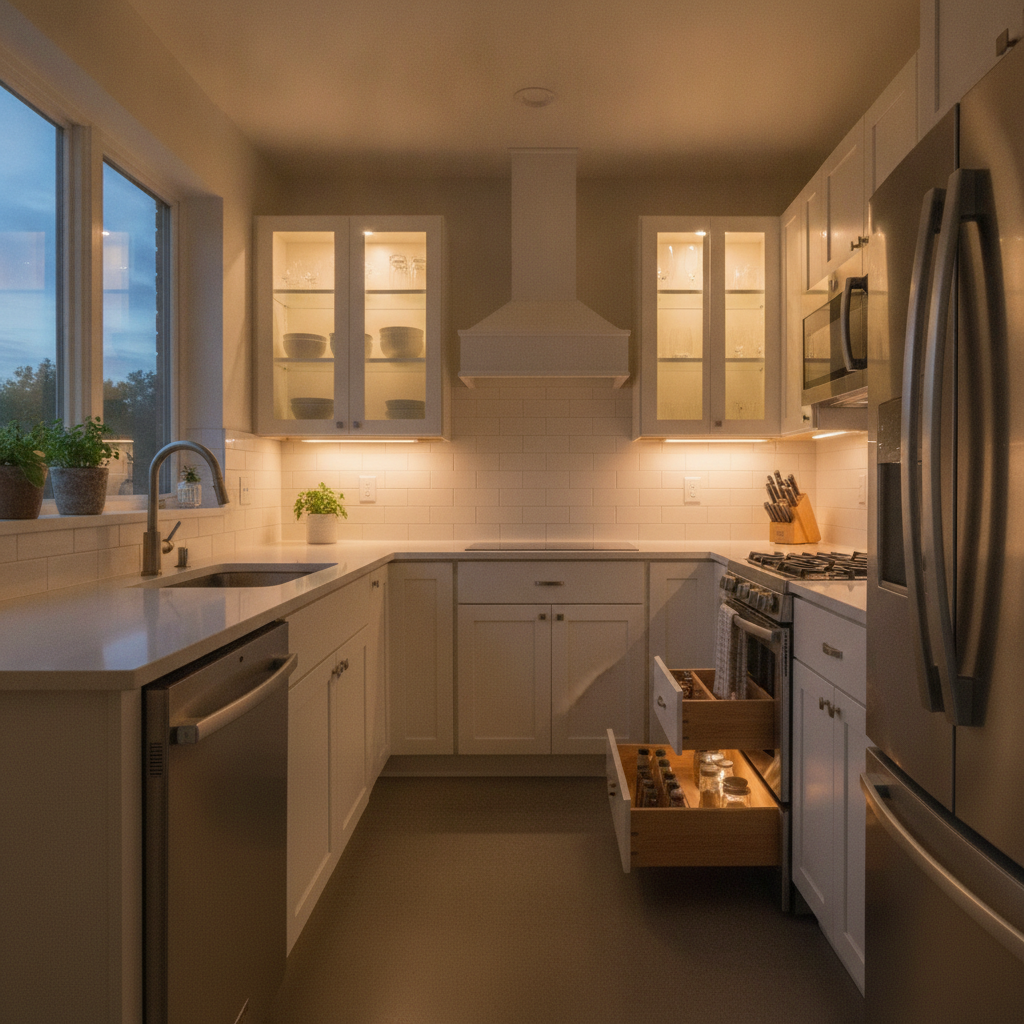
Under-cabinet lighting is the entry point for most people, and for good reason — it delivers immediate results with minimal effort. LED strip lights from brands like Govee or Philips Hue sit flush against the underside of upper cabinets and cast a wide wash of light across your countertop and backsplash. That illuminated backsplash suddenly reads as a full surface rather than a shadowed backdrop, which tricks the eye into perceiving more depth. Warm white tones (around 2700–3000K) tend to work best in kitchens because they feel inviting rather than clinical. Tape-backed strips mean no drilling, no wiring, and no contractor.
Use Glass-Front Cabinets as Lit Display Windows
If any of your upper cabinets have glass doors or open shelving, that's prime territory for interior lighting. A small LED puck light or a short strip tucked along the top interior edge of the cabinet illuminates whatever is inside — glassware, dishes, small plants — and turns the cabinet into a visual focal point. When something in a room glows, the eye travels toward it, and that movement creates a sense of space. IKEA's OMLOPP range is designed specifically for this purpose and fits inside most standard cabinet depths without modification.
Choose Lighting Color Temperature Deliberately
Not all white light behaves the same way in a small kitchen. Cool white light (4000K and above) tends to flatten surfaces and can make tight spaces feel sterile. Warm white, on the other hand, bounces softly off walls and cabinetry, creating a layered glow that adds visual warmth and perceived dimension. Tunable LED strips let you adjust the color temperature depending on the time of day — brighter and cooler for morning tasks, warmer and softer in the evening. Getting this right costs nothing extra but changes how the room registers emotionally.
Light the Inside of Deep Pantry Cabinets
Pantry-style cabinets with deep shelves are notorious for swallowing their own contents in shadow. Adding a motion-activated LED bar to the interior — the kind that runs on batteries and requires no wiring — solves the practical problem while also creating a subtle illumination effect when the door is open. An open, lit cabinet reads as an extension of the room rather than a dark void. Brands like Mr. Beams make stick-on options that install in under five minutes and last months on a single set of batteries.
Reflect Light with Strategic Interior Surfaces
The material inside your cabinets affects how well lighting works. White or light-colored cabinet interiors, glossy paint finishes, and even contact paper in a reflective tone all bounce light back into the room rather than absorbing it. If your cabinets have dark interior walls, the light you add will feel muted. A quick coat of white paint or a roll of white peel-and-stick liner from any home goods store dramatically improves the return you get from any lighting fixture. It's one of those small changes that quietly multiplies the effect of everything else.
Layer Toe-Kick Lighting Along the Base
Toe-kick lighting runs along the base of lower cabinets at floor level and creates a floating effect — the cabinets appear to hover slightly above the floor, which opens up the lower visual field and makes the kitchen feel less grounded and heavy. This is a popular technique in design studios and showrooms for a reason. It works by drawing the eye downward and then outward, expanding the perceived footprint of the room. LED rope lights work well here, and many versions are flexible enough to bend around corners without cutting.
Use Dimmers to Control Depth and Atmosphere
Fixed-brightness lighting has limits. Dimmer switches or dimmer-compatible LED controllers let you shift the intensity of your cabinet lighting throughout the day, and that variability plays a key role in how spacious a kitchen feels at different times. Bright, even light during meal prep makes the room feel functional and efficient. Turned down in the evening, the same lights create pools of warmth that make the kitchen feel more intimate rather than cramped. Smart plugs from brands like Kasa work with most LED strips and let you control everything from your phone without rewiring anything.
Avoid Overlighting — More Isn't Always More
One of the easiest mistakes when adding cabinet lighting is going too far. When every surface is equally illuminated at the same intensity, the room loses its sense of depth and contrast. Depth is what creates the illusion of space, so you want some areas lit and others in relative shadow. Focus your lighting on two or three key areas — under the upper cabinets, inside one or two display cabinets, and possibly the toe-kick — rather than flooding every surface. That selectivity is what makes the result look considered rather than cluttered.
A small kitchen doesn't have to feel like one. Cabinet interior lighting is one of the few upgrades that costs very little, requires no professional help, and produces a result you'll notice the moment you flip the switch. Start with one area, see how it changes the room, and build from there. The right light in the right place has a way of making everything feel more possible.