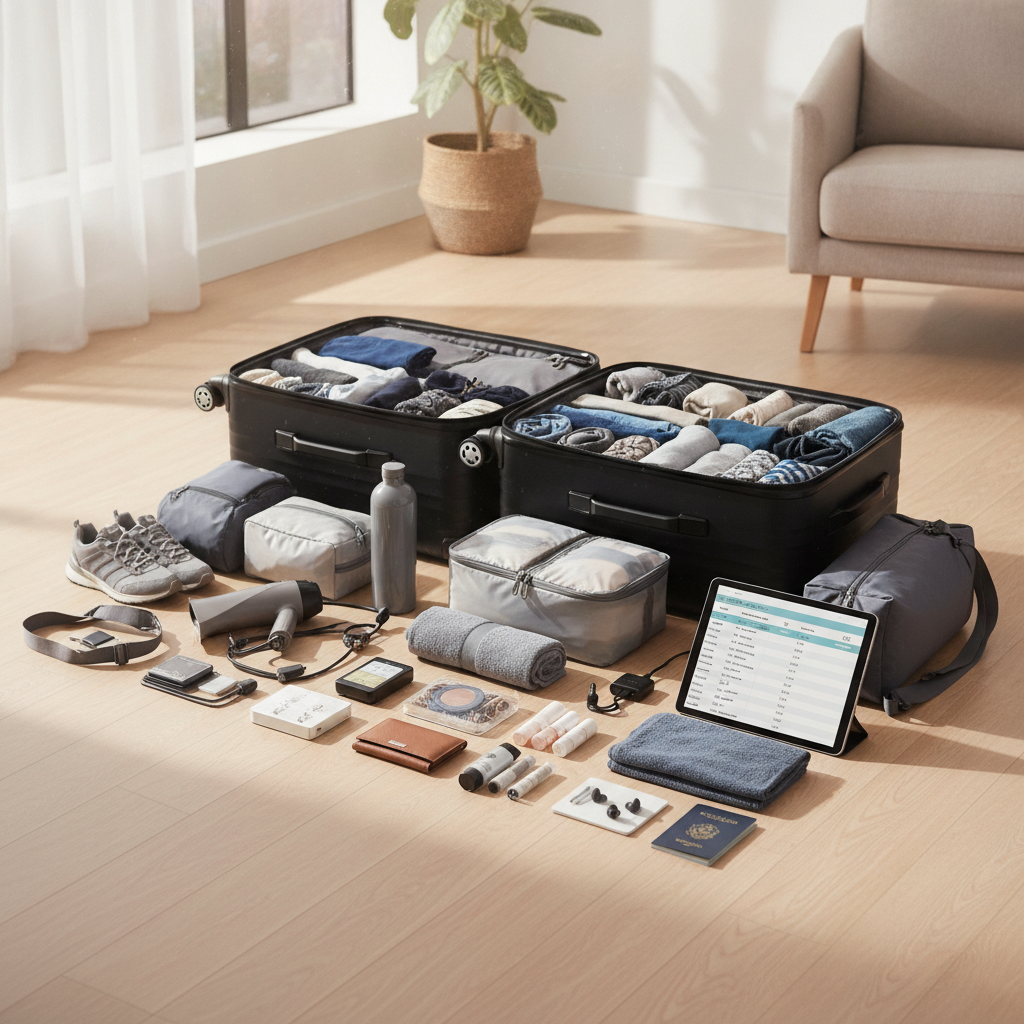
Packing light sounds simple until you're standing in front of a suitcase three days before a two-week trip and realizing that everything you thought you needed doesn't fit — and the things you actually need aren't even in the bag yet. Carry-on-only travel for an extended trip isn't just about packing fewer clothes. It requires a fundamentally different approach to what you buy, what you plan, and what you're willing to let go of before you ever reach the airport.
Rethink What "Enough Clothes" Actually Means
The mental shift that makes carry-on travel work for two weeks is accepting that you'll wear things more than once and wash them along the way. That's not a compromise — it's the whole strategy. Once you commit to it, the packing list becomes much more manageable. Plan for roughly five to seven versatile pieces that mix and match across outfits, plus one or two items suited to the specific climate or activities you've planned. Merino wool and quick-dry fabrics are worth the higher upfront cost because they dry overnight, resist odor longer than cotton, and pack down small. Brands like Uniqlo and REI carry reliable options at different price points that hold up well across extended trips.
Build Around a Color System
Choose a two or three-color palette before you buy anything. Navy, grey, and white travel well together because everything pairs with everything else. If you're adding a print or bold color, make sure it works with at least three other items in the bag. This isn't about being boring — it's about not packing yourself into a corner where you have five items that only work as one outfit.
Buy Specifically for the Trip, Not Generically
If you're heading somewhere cold, one well-insulated mid-layer beats three thinner sweaters every time. If you're going somewhere warm and humid, synthetic fabrics that wick moisture will outperform linen despite linen's reputation for being a warm-weather fabric. Buy for the actual conditions of the trip, not an idealized version of the trip.
Choose Your Bag Before You Choose Anything Else
The bag dictates every other decision you make, so it should be the first purchase — not the last. Airline carry-on dimensions vary by carrier, and while most major airlines align closely, budget carriers like Ryanair enforce stricter size limits than larger carriers. Before you commit to a bag, check the policies for every airline on your itinerary. A 40-liter backpack-style carry-on, like the ones made by Osprey or Aer, tends to thread the needle between maximum capacity and real-world usability. Hard-shell rollers look appealing, but they compress your packing options because the shell's shape is fixed. A structured soft-sided bag with external compression straps gives you more flexibility.
Understand What Goes Where
Learn the actual liquid rules for your departure country and any layover country before you finalize your toiletry kit. Solid toiletries — shampoo bars, solid sunscreen, tooth tabs — eliminate the liquids problem almost entirely and free up space in your one-quart bag for the things that genuinely need to be liquid. This is one of the most overlooked pre-trip purchases for first-time carry-on travelers, and it makes a noticeable difference at security.
Plan Your Laundry Strategy in Advance
Two weeks of clothes in a carry-on means you're doing laundry at least once, possibly twice. This isn't optional — it's part of the trip plan. Research laundromats near your accommodations before you leave, or choose accommodations that offer laundry service. Apps like Yelp or Google Maps work fine for finding laundromats on the ground, but doing a quick search before you leave tells you whether laundry is even realistic for the areas you're staying. Some destinations make this easy; others require more planning. If you're moving frequently between cities, a portable travel laundry kit — a small sink stopper, a travel-size detergent sachet, and a clip-based drying line — weighs almost nothing and solves the problem in any hotel room with a sink and a bathroom rail.
Factor Laundry Into Your Schedule
Building one slower day into your two-week itinerary isn't a waste — it's where the laundry happens, where you recharge, and often where you have the most spontaneous local experiences anyway. Don't schedule laundry as an afterthought. Put it on the calendar the same way you'd book a museum or a train.
Audit Your Technology and Charging Setup
Travelers consistently underestimate how much weight and space electronics take up. A phone, a lightweight laptop or tablet, a camera, a portable charger, and all the associated cables add up quickly. Go through your actual usage honestly: most travelers use their phone for navigation, photography, and communication, which means the dedicated camera and the heavy laptop are worth reconsidering for a trip where packing space is limited. A universal travel adapter that covers multiple regions saves you from bringing multiple adapters, and a multi-port USB charging hub means one wall plug handles everything overnight. The app PackPoint is useful for building and refining your gear list before you commit to purchases, because it tailors suggestions to your destination, dates, and activities.
Protect Your Devices Without the Bulk
Skin-style phone cases add almost no weight. A slim laptop sleeve without a separate padded bag works fine inside a structured carry-on that already has some padding. Resist the urge to over-protect gear with cases that are heavier than the items they're protecting.
Budget for the Pre-Trip Investment Honestly
Going carry-on only for an extended trip often costs money upfront. Quality fabrics, a well-made bag, solid toiletries, and a proper charging setup represent real purchases. The financial trade-off is that you avoid checked bag fees — which on multiple flights and budget carriers can exceed the cost of the gear you're buying — and you move faster and more freely throughout the trip. It helps to run the numbers before you travel: tally the checked bag fees you'd pay across your full itinerary and set that as your pre-trip gear budget. You'll often find the investment pays for itself within a single trip.
As carry-on travel becomes more common, the gear available is getting better and more specialized. Clothing brands are designing specifically for multi-week travel, airline policies are shifting with more transparency, and packing apps are becoming smarter about suggesting what actually works for different types of itineraries. The more deliberately you plan this before you leave — bag first, then clothes, then toiletries, then tech — the less stressful it becomes once you're actually moving. Two weeks out of a single bag is genuinely achievable, and the planning is where it either works or falls apart.