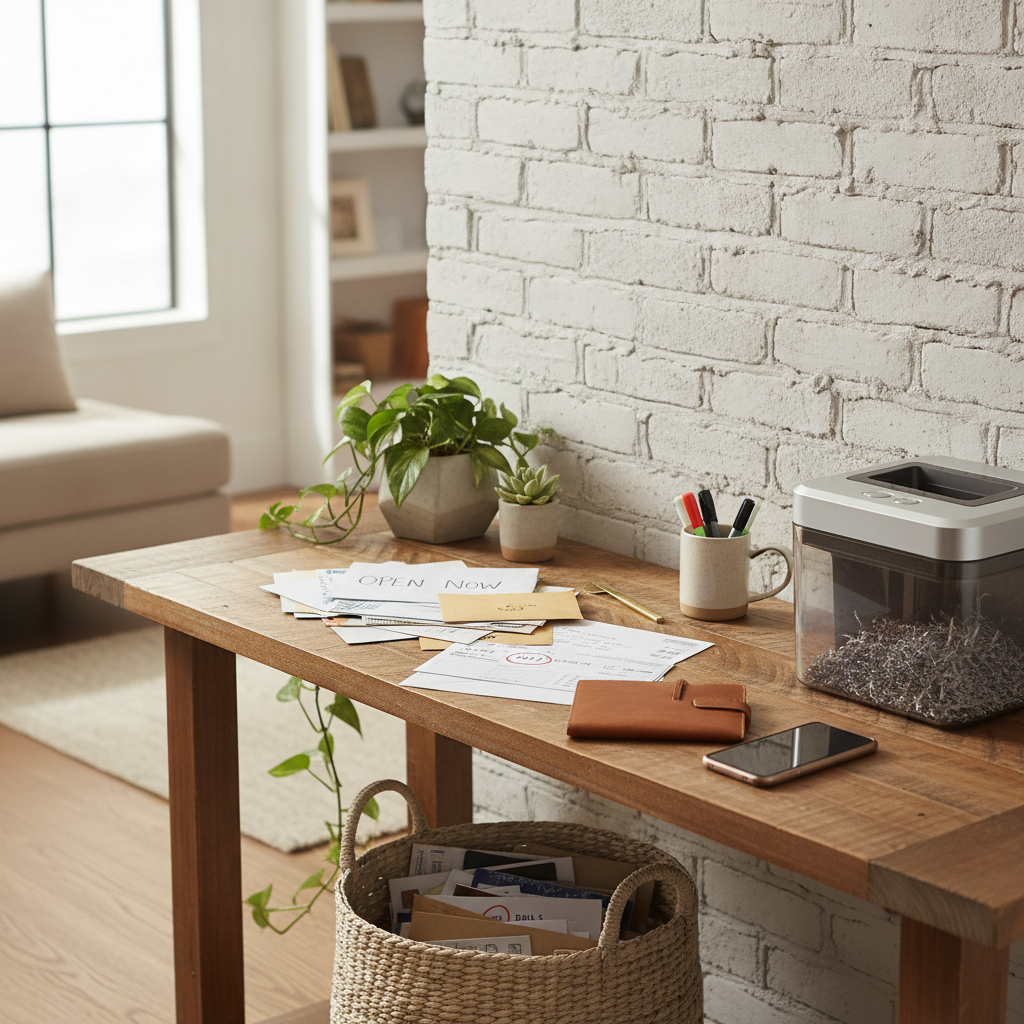
Paper mail still arrives whether you want it to or not. Bills, insurance statements, medical EOBs, subscription renewal notices — they pile up on counters, get stuffed into junk drawers, and occasionally go missing entirely until someone's getting a late fee or a service interruption notice. A dedicated bill-opening station is one of those deceptively simple home organization moves that quietly prevents real financial headaches. It doesn't require a home office or a large footprint. It just requires a consistent spot and a little intention.
Choose a Location That Matches Your Actual Habits
The best spot for your bill station isn't necessarily the most logical one — it's the one you'll actually use. If you drop everything on the kitchen counter when you walk in, that's your zone. If you have a small desk near the front door, that works too. The goal is to intercept mail before it migrates somewhere unhelpful. Fighting your existing patterns rarely works long-term, so anchor the station to wherever you already pause when you enter your home. Even a corner of a bookshelf or a small console table in the entryway can work perfectly.
Keep the Right Tools Within Arm's Reach
A bill station without the right tools turns into a surface where you intend to deal with things later. At minimum, you need a letter opener, a pen, a stapler, and a small pair of scissors. A basic wicker tray or a modular desktop organizer — something like a simple setup from IKEA's KVISSLE line or a similarly priced bamboo organizer — keeps everything contained. If you pay bills online, having a sticky note pad nearby for jotting account numbers or reference codes before you head to your computer saves surprising amounts of back-and-forth. Small tools, big difference.
Create a Two-Tray System for Immediate Sorting
One of the easiest ways to avoid the dreaded mail pile is a simple two-tray setup: one for action items, one for filing. When mail arrives, you open it at the station, decide in the moment whether it needs a response or payment, and drop it in the correct tray. Nothing gets left in a vague middle ground. Action trays benefit from being checked twice a week on a set schedule — Tuesday and Friday, for example. The filing tray gets emptied once a month into a proper folder or scan-and-shred workflow. This system works in small apartments just as well as larger homes.
Add a Shredder Nearby for Instant Disposal
One of the friction points that causes mail to pile up is not knowing what to do with sensitive documents once you're done with them. Having a small cross-cut shredder within a step or two of your bill station removes that hesitation entirely. Models from Fellowes or AmazonBasics in the compact range are affordable and handle the typical household volume without trouble. Pre-approved credit card offers, old billing statements, and anything with your account numbers or Social Security information should be shredded before trash day — not left on the counter waiting for a more convenient moment.
Set Up a Simple Digital Backup System
For important documents — insurance policies, lease agreements, utility account confirmations — a quick photo or scan into a cloud folder goes a long way. Google Drive or Dropbox both offer enough free storage for years of household paperwork. The habit is simple: open the bill, process it, and if it's something you might need to reference later, snap a photo before it goes into the filing tray. You don't need a dedicated scanner for this. Your phone handles it fine. The idea is to make the digital archive a natural extension of the physical station, not a separate chore.
Use a Small Calendar or Whiteboard for Due Dates
A wall-mounted mini whiteboard or a small paper calendar kept at the station gives you a visual anchor for payment due dates. When you open a bill, write the due date immediately — don't rely on memory or email reminders alone. Many people find that seeing due dates in a physical format creates a different kind of accountability than a digital notification that's easy to swipe away. If your station is near a kitchen or hallway wall, a magnetic whiteboard from a brand like U Brands takes up almost no space and stays visible throughout your week without any setup beyond a nail.
Keep a Running Log of Monthly Charges
A small notebook or a single printed template kept at the station can serve as a simple monthly expense log. Each time you open a bill, jot down the provider, the amount, and the due date in one row. Over a few months, patterns emerge — and so do surprises. A streaming service that quietly increased its rate, an insurance premium that crept up at renewal, a utility bill that spiked without explanation. Reviewing this log takes five minutes once a month and functions as a low-effort financial check-in that most people skip until something goes wrong.
Design for the Space You Actually Have
Not every home has room for a dedicated desk or filing cabinet. That's fine. A bill station can live in a kitchen drawer with a small divider insert, inside a hall closet on a slim shelf, or even in a fabric hanging organizer mounted on the back of a door. The physical size of the setup matters far less than the consistency of using it. What makes this work is the habit, not the furniture. Whether your station is a full desktop setup or a labeled tray on a shelf, returning to the same spot every time you handle mail is what prevents the chaos from reasserting itself.
A dedicated bill-opening station is less about organization for its own sake and more about protecting your finances from small lapses that compound over time. Missed due dates, overlooked rate increases, lost documents — these aren't catastrophic on their own, but they add up. Building a simple, consistent spot to handle incoming mail takes a weekend afternoon to set up and becomes one of those quiet household systems you stop noticing because it's always working in the background.