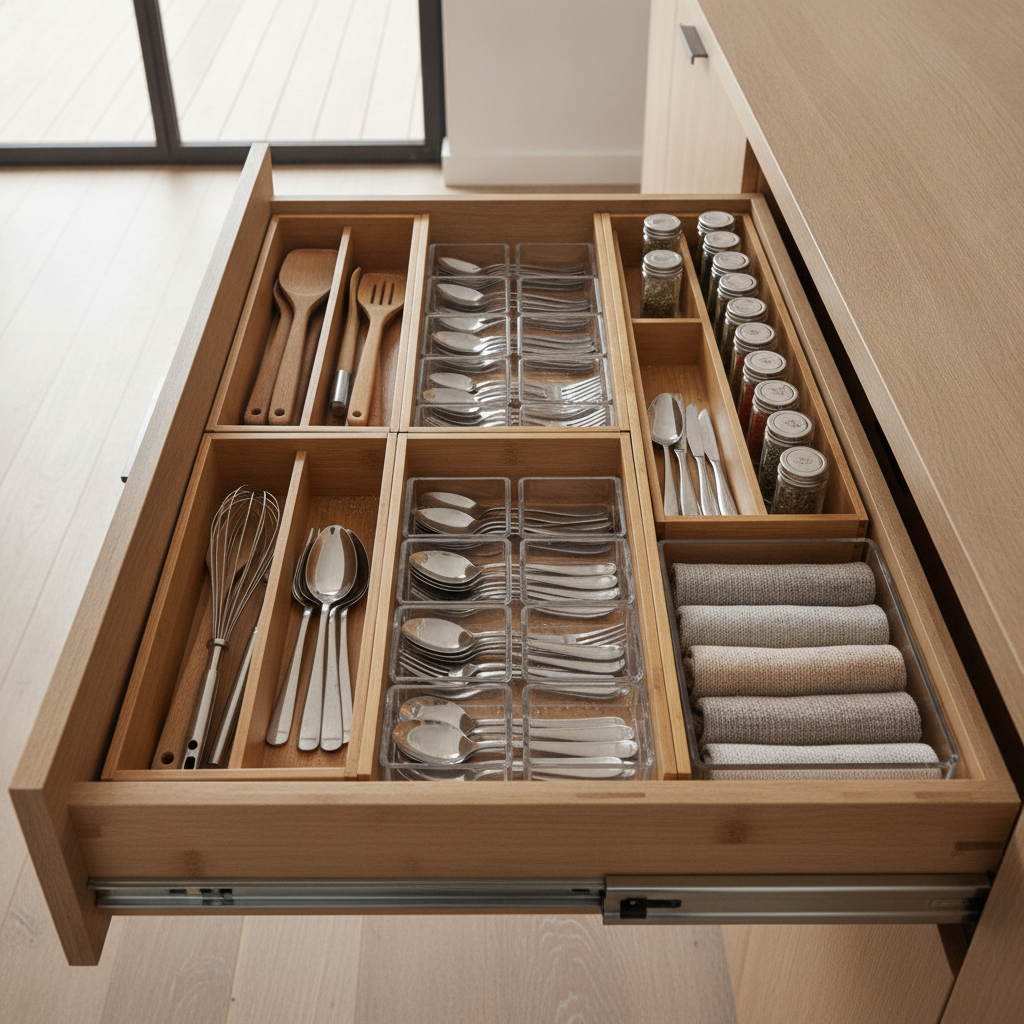
Kitchen drawers have a way of turning chaotic within days of being tidied. You sort everything carefully, find a home for every utensil and gadget, and then real life happens — cooking, rushed mornings, family members rummaging for the peeler — and the whole system collapses. The good news is that most kitchen drawer chaos isn't a willpower problem. It's a structure problem, and the right dividers and modular inserts can solve it permanently.
Measure Your Drawers Before You Buy Anything
The single biggest mistake people make when buying drawer organizers is skipping the measuring step. Grabbing a set of bamboo dividers from Amazon Basics or OXO without knowing your drawer dimensions leads to wasted money and awkward gaps that collect crumbs. Measure interior width, depth, and height — including the depth from the front panel to the back wall. Shallow drawers need low-profile inserts; deep drawers can handle stackable tiers. Having these numbers on hand before you shop makes every purchase more deliberate and less likely to get returned.
Choose Modular Over Fixed Configurations
Fixed organizer trays look neat in product photos but rarely match real drawer layouts. Modular systems — like those from Yamazaki Home or the iDesign Linus line — let you rearrange compartments as your cooking habits change. Maybe you bake heavily in winter and need more space for measuring spoons, but during summer you want that space back for grilling tools. A modular setup adapts without requiring a full restart. This flexibility is especially useful in smaller kitchens where every inch of drawer space needs to earn its place on a rotating basis.
Anchor Dividers So They Don't Shift During Use
A divider that slides around every time you open the drawer defeats the entire purpose of having one. Spring-loaded tension dividers, like those sold by Rev-A-Shelf, grip the drawer walls without any hardware and hold firm through daily use. Adhesive-backed rubber pads placed under flat organizer trays also prevent movement on smooth drawer interiors. If you're using a wooden tray insert, a thin strip of non-slip shelf liner underneath it makes a noticeable difference. The goal is a setup that stays exactly where you put it, even after a week of heavy cooking.
Group Items by Task, Not by Category
Most people sort kitchen drawers by object type — all spatulas together, all knives in one block — but organizing by cooking task tends to work better in practice. Grouping your prep tools (peeler, paring knife, cutting board scraper) in one section and your serving tools in another means you're pulling from one spot instead of three during a meal. Inserts with varied compartment sizes, rather than uniform grids, support this kind of task-based grouping more naturally. It's a small mental shift that makes the drawer genuinely useful rather than just visually tidy.
Use Vertical Knife Slots Instead of Separate Blocks
Counter space is precious, and in-drawer knife organizers solve the clutter problem without sacrificing a single square inch of workspace. Brands like Wüsthof and Joseph Joseph both offer in-drawer knife inserts with angled or vertical slots that protect blade edges while keeping knives accessible. These inserts are also significantly safer than loose knives rolling around in a junk drawer. If your knife collection is small — three or four knives — a simple in-drawer block takes up surprisingly little room and keeps the countertop clear for actual cooking work.
Dedicate One Drawer Entirely to Everyday Essentials
Rather than spreading daily-use items across multiple drawers, create one highly accessible drawer that holds only what you reach for every single day — your main cooking spatula, tongs, a good knife, a wooden spoon, and a can opener. Keep this drawer close to the stove. Use a simple insert to keep these few items from sliding around, but resist the urge to fill remaining space with rarely used tools. A drawer with room to breathe is easier to use than one packed to capacity. Scarcity of items in this drawer actually makes it more functional, not less.
Reassess the System After Sixty Days
No organization system survives first contact with real life perfectly. After about two months of using new inserts or dividers, take stock of what's working and what isn't. Are certain compartments always empty? Is one section overflowing while another sits unused? This kind of honest reassessment — shifting a divider, swapping two sections, removing an insert that turned out to be unnecessary — is what separates a system that lasts from one that quietly fails. The modular nature of quality insert systems makes these small adjustments easy to make without starting over from scratch.
Don't Overlook the Utensil Drawer Liner
Before placing any insert or organizer, a quality drawer liner on the base protects the wood, prevents moisture damage, and keeps everything slightly quieter when drawers open and close. Non-adhesive liners from Con-Tact or similar brands can be cut to size in minutes and replaced easily when they wear out. A liner also creates just enough grip to stop lighter plastic inserts from moving around, which reduces the need for additional anchoring solutions. It's a modest addition that extends the life of both the drawer and the organizers sitting inside it.
The right combination of dividers and modular inserts doesn't just make a kitchen look organized — it makes cooking faster, quieter, and genuinely less frustrating on a daily basis. Starting with one problem drawer and getting that right is more effective than trying to overhaul every drawer at once. Pick the drawer that annoys you most, measure it properly, choose a flexible insert system, and build from there. Small, well-executed changes in the kitchen tend to stick in a way that sweeping reorganizations rarely do.