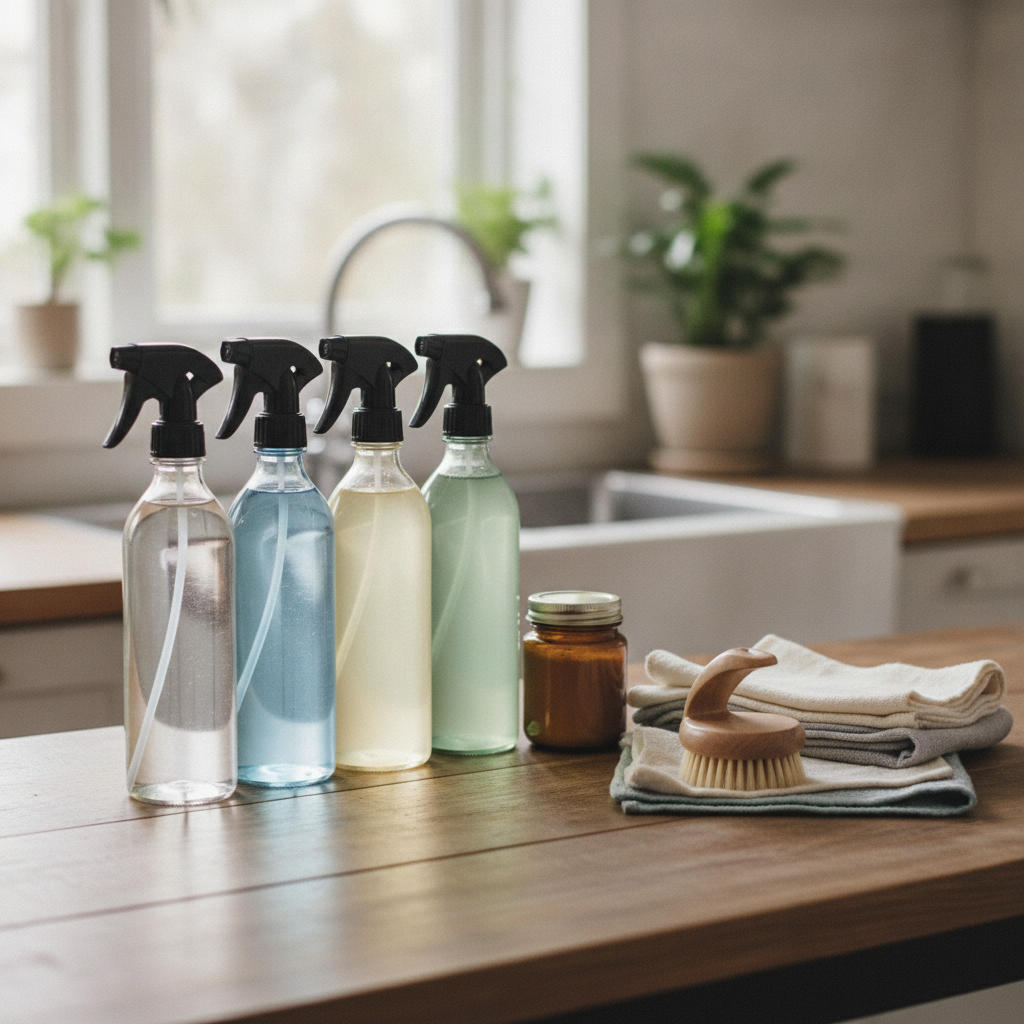
Most people own far more cleaning products than they actually need. Open the cabinet under your sink and you'll likely find a crowded lineup of specialized sprays, foams, gels, and wipes — each one purchased for a specific surface or situation, and most of them doing roughly the same thing. The result is a cluttered cabinet, duplicate spending, and a cleaning routine that takes longer than it should because you're constantly switching products and second-guessing which one goes where.
Why Does Product Overload Happen in the First Place?
Cleaning product marketing is exceptionally good at convincing you that every surface in your home requires its own dedicated solution. There's a spray for stainless steel, another for granite, one for glass, one for bathroom tile, and a separate one for the toilet bowl — and somehow they're all non-negotiable. Retailers like Target and Walmart devote enormous shelf space to these categories, which makes the variety feel like necessity. In reality, most of these products share active ingredients and differ mainly in fragrance and packaging. Buying into the specialization myth is one of the quietest ways household spending quietly grows.
What Is a Four-Product Cleaning Rotation?
The concept is straightforward: identify four versatile products that, used correctly, handle the full range of cleaning tasks in your home without redundancy. The goal isn't minimalism for its own sake — it's efficiency. A solid four-product rotation typically includes an all-purpose spray for everyday surfaces, a disinfectant for kitchens and bathrooms, a mild abrasive paste or powder for scrubbing, and a floor cleaner appropriate for your specific flooring type. Brands like Method, Mrs. Meyer's, and Seventh Generation all offer concentrated versions of these categories, which stretch further and reduce packaging waste at the same time.
How Does an All-Purpose Spray Replace Six Products at Once?
A quality all-purpose cleaner handles countertops, stovetops, appliance exteriors, cabinet faces, bathroom sinks, and most non-porous surfaces without leaving residue or causing damage. The key is choosing one that's pH-balanced and safe for a broad range of materials. You don't need a separate granite spray, a separate stainless cleaner, and a separate bathroom surface spray — all three are doing the same job with different labels. Switching to one dependable all-purpose product eliminates the guesswork and frees up significant cabinet space. It also means you stop running out of three products at once and buying three replacements unnecessarily.
When Does a Dedicated Disinfectant Actually Matter?
Not every surface in your home needs to be disinfected — it just needs to be clean. Disinfection is most important in high-contact, high-bacteria zones: toilet surfaces, kitchen cutting boards, sink drains, and door handles during illness season. Keeping one good disinfectant specifically for these spots means you're using it intentionally rather than spraying it on everything by default. Products like Lysol Disinfectant Spray or a bleach-based dilution work well when applied with proper contact time, something most people skip anyway when using spray-and-wipe routines on low-risk surfaces.
What Does a Mild Abrasive Do That a Spray Can't?
Certain cleaning jobs require gentle mechanical action rather than just chemical contact. Soap scum buildup in a shower, baked-on residue in a cast iron skillet, or hard water stains around a faucet base all respond better to a light scrubbing paste than to a spray. Bar Keepers Friend is a widely trusted option that handles a surprising range of tasks from porcelain to stainless steel without scratching. Having one abrasive product in your rotation fills the gap left by all-purpose sprays without requiring you to stock a separate bathroom scrub, a kitchen scrub, and an oven cleaner. One product, multiple jobs.
How Does Floor Cleaner Fit Into a Minimal Rotation?
Floor care is where specialization sometimes does make sense, because hardwood, tile, vinyl, and laminate genuinely respond differently to cleaning solutions. The practical approach is to own one floor cleaner matched to your dominant flooring type and use a diluted all-purpose product on secondary surfaces like tile in a small bathroom. If your home is primarily hardwood, a product like Bona Hardwood Floor Cleaner handles the bulk of your needs. Multi-floor homes may need two products here, but that's still a far smaller collection than most cabinets currently hold.
Why Does Fewer Products Actually Lead to Cleaner Results?
When you own fewer products, you use each one correctly and consistently. Confusion about which product goes where — and hesitation about whether a spray is safe for a particular surface — is a real friction point that causes people to either use the wrong product or skip cleaning altogether. A simplified rotation removes that decision fatigue. You know exactly what you're reaching for, how to use it, and when to replace it. Cleaning becomes a faster, more confident habit rather than a research project every time you pick up a bottle.
How Do You Transition Away From a Cluttered Cabinet?
The practical starting point is a simple audit. Pull everything out, group products by function, and identify what you actually have multiples of. Most people discover three or four sprays that all clean the same kitchen surfaces, plus several bathroom products that duplicate each other. Use up existing stock before replacing it, and replace only with the four core categories. Resist the temptation to buy a new specialty product the next time an ad promises it's essential for one specific job. In almost every case, something already in your rotation handles that task well enough.
The cleaning product market will keep expanding into more niches, more scents, and more surface-specific formulas — that's simply where the commercial incentive points. But for anyone trying to run a household efficiently and spend money more deliberately, the four-product rotation is a durable strategy that holds up regardless of what's new on the shelf. Keep the cabinet simple, use what you have with intention, and the results genuinely speak for themselves.