The gap between a store-brand product and its name-brand equivalent is rarely as wide as the price difference suggests — and sometimes it doesn't exist at all. Private-label grocery products have grown from bare-bones budget alternatives into a sophisticated tier of retail strategy, with major chains investing heavily in packaging, formulation, and shelf positioning. Understanding how these products are priced, and where the quality actually diverges, helps shoppers make smarter decisions on nearly every aisle.
How Do Retailers Determine Private-Label Pricing?
Private-label pricing is built around a margin advantage, not a quality deficit. Retailers like Kroger, Costco, and Trader Joe's source their store-brand products from the same manufacturing networks that produce name-brand goods — sometimes from the identical facility — and eliminate the costs associated with national advertising, broker fees, and brand licensing. The result is a product that can be priced significantly lower while still generating stronger profit margins for the retailer. That pricing gap is engineered to feel like a value proposition to the consumer while quietly benefiting the store's bottom line.
Why Are Name Brands Priced So Much Higher?
Name-brand pricing reflects more than the cost of ingredients or production. Companies like General Mills or Heinz carry decades of brand equity, and that equity is maintained through substantial marketing budgets, sponsored shelf placement, and consumer loyalty programs — all costs that get passed directly to the shopper. A box of cereal from a national brand may cost thirty to fifty percent more than its store-brand counterpart not because the contents are meaningfully superior, but because the consumer is also paying for the brand's visibility and reassurance. Familiarity, in grocery retail, commands a premium of its own.
Where the Quality Gap Is Essentially Nonexistent
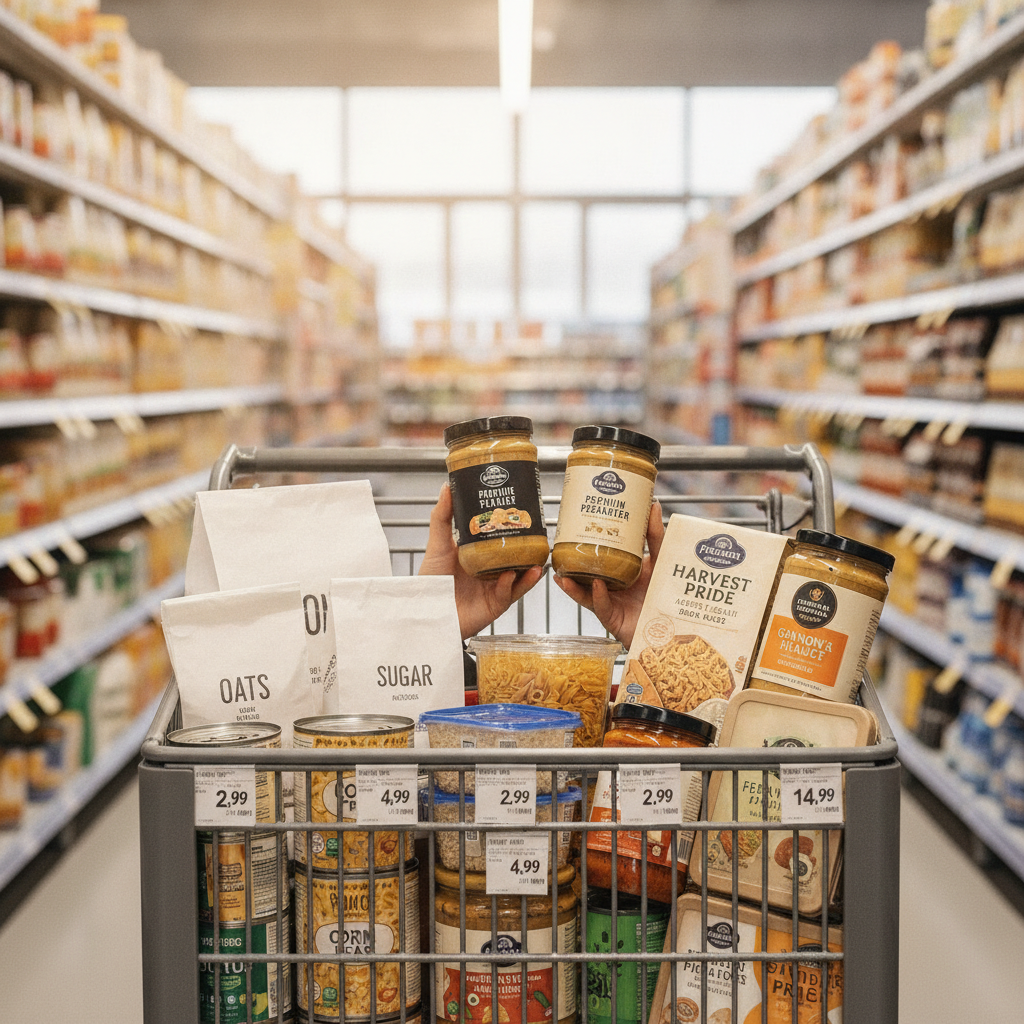
For a wide range of grocery staples, the quality difference between private-label and name-brand products is negligible in any practical sense. Pantry items like canned tomatoes, dried pasta, flour, sugar, olive oil, and baking soda are governed by commodity standards that leave very little room for meaningful variation. Frozen vegetables, basic dairy products, and store-brand over-the-counter medications — which must meet the same FDA efficacy and formulation standards as name brands — are consistently rated as equivalent by independent product testing organizations. In these categories, choosing the store brand is straightforwardly the smarter financial decision.
When the Quality Difference Is Real and Worth Paying For
Not every private-label product is a seamless substitute, and certain categories reveal genuine differences that affect the experience. Snack foods, sodas, and highly processed items often rely on proprietary flavor formulations that are difficult to replicate without using the exact same supplier. Store-brand versions of products like Oreos, Lay's chips, or Coca-Cola frequently land noticeably off in texture or taste. Fresh meat and seafood quality can also vary depending on how aggressively a retailer manages its supply chain. In categories where sensory experience, texture, or a specific flavor profile is central to enjoyment, the name-brand premium is sometimes worth evaluating honestly.
How Store-Brand Tiers Change the Value Equation
Retailers have complicated the simple name-brand versus private-label comparison by introducing tiered private-label lines. Most large grocery chains now operate at least two distinct store-brand tiers: an economy line positioned as the lowest-cost option, and a premium line designed to compete with or surpass national brands. Whole Foods' 365 label, Target's Good & Gather line, and Costco's Kirkland Signature brand are examples of premium private-label products that frequently outperform their name-brand counterparts in blind taste tests. Understanding which tier a store brand occupies changes how it should be evaluated relative to its price.
How to Use This Knowledge When You Shop
Armed with a clearer understanding of how private-label pricing works, you can approach the grocery store with a more deliberate strategy. Start by defaulting to the store brand on pantry staples, cleaning supplies, and generic medications — these are categories where the savings are real and the trade-off is minimal. For snack foods, specialty condiments, or products you buy primarily for a specific brand flavor, try the store-brand version once before committing to the name-brand price long term. Lean on premium private-label tiers, like Kirkland Signature at Costco, when you want quality without the marketing markup. The goal isn't to avoid name brands categorically, but to reserve them for the moments when the quality gap genuinely justifies the cost difference.
The original observation holds up across every aisle: the price gap between private-label and name-brand products is engineered more than it is earned. Retailers have built a tiered system that rewards shoppers who take time to evaluate rather than reach for habit. Knowing when the store brand is an equivalent product in cheaper packaging — and when it genuinely falls short — is one of the most consistently useful skills a grocery shopper can develop.