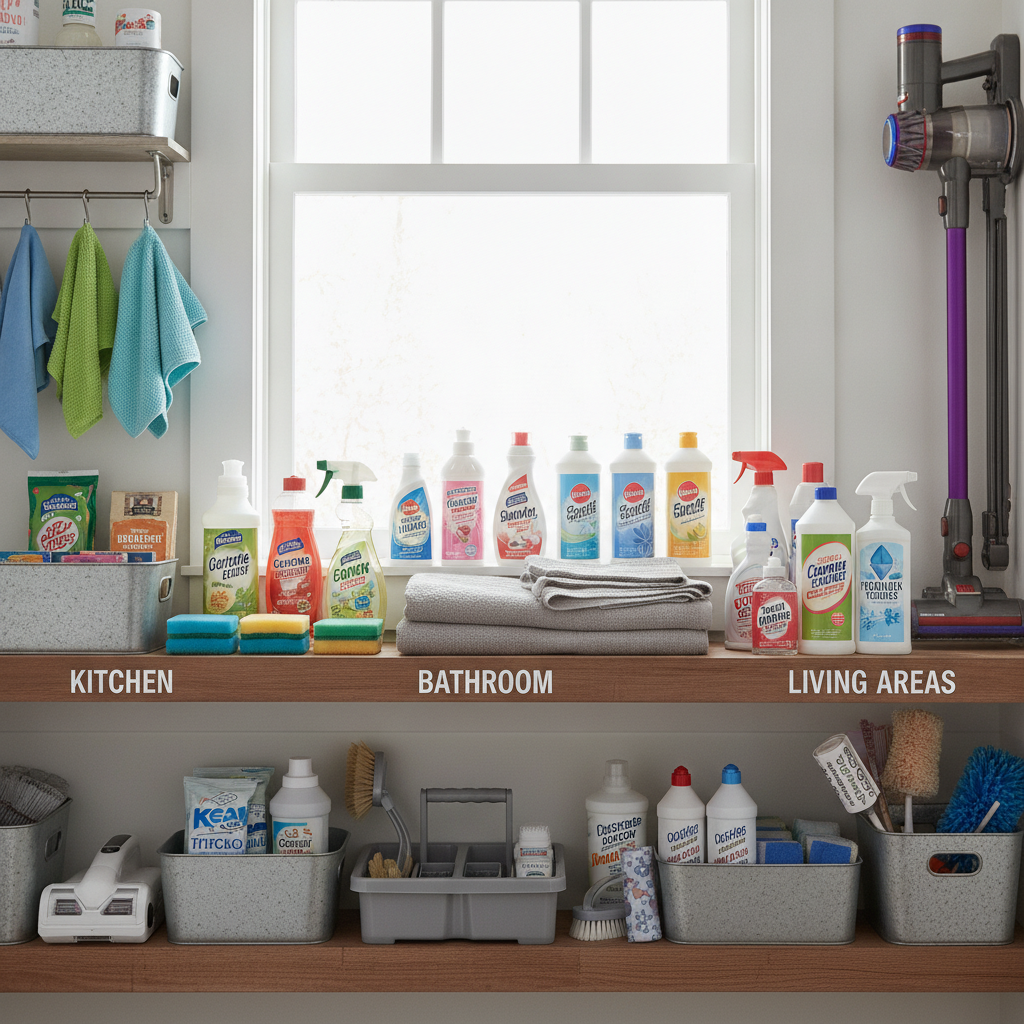
Cleaning your home takes longer than it should — not because you're slow, but because your system is fighting you. Most people organize their supplies the way stores sell them: all the sprays together, all the cloths in one drawer, scrubbers in a pile under the sink. It feels logical until you're hauling a caddy from room to room, backtracking twice, and spending more time managing supplies than actually cleaning. There's a better way, and it's simpler than you might expect.
The Logic Behind Zone-Based Organization
Zone-based supply storage means keeping dedicated cleaning tools in the rooms where they're used — bathroom supplies in the bathroom, kitchen supplies in the kitchen, and so on. Instead of one central cleaning cabinet, you create small, self-contained stations throughout your home. The payoff is immediate: when you're ready to wipe down the bathroom, everything you need is already there. No assembly, no trips to another room, no excuses to put it off until later. The mental load of getting started drops dramatically, which means you actually start.
Setting Up Your Bathroom Station
The bathroom is the easiest place to begin because its needs are consistent. A toilet brush, a disinfectant spray like Lysol or Method, a glass cleaner, two microfiber cloths, and a grout scrubber cover nearly every weekly task in the space. Store them in a small caddy under the sink or in a corner basket that blends with the room. When Saturday morning rolls around, you reach under the cabinet and the job is done in ten minutes — no setup, no searching. That efficiency adds up over a year of weekly cleans.
Building a Kitchen-Specific Supply Kit
Kitchens generate their own category of mess: grease, food residue, and hard water stains that need specific products. A dedicated kitchen kit should include a degreaser spray, a dish cloth separate from your bathroom cloths, a stainless steel polish for appliances, and a soft scrubber for the sink. Brands like Seventh Generation and Bar Keepers Friend work well and store compactly. Keeping these in a pull-out drawer or under-sink bin means you're not dragging your bathroom spray over to the stovetop — which also prevents cross-contamination between cleaning zones.
Why Labeling Your Supplies Matters More Than You Think
When multiple people share a home, zone-based systems only work if everyone respects the boundaries. Labeling each caddy — even with basic masking tape and a marker — removes the guesswork. "Bathroom Only" and "Kitchen Only" labels prevent supplies from migrating and diluting your system. In households with children old enough to help with chores, clear labels also make delegation easier. You're not giving instructions; the room itself communicates what belongs there. This small step turns a personal productivity habit into a whole-household cleaning rhythm.
Creating a Living Room and Common Area Kit
Living rooms and hallways get overlooked in most supply-storage systems because they don't have obvious storage nooks. A small basket tucked in a media console or closet shelf works well here. Stock it with a dusting wand, a fabric refresher like Febreze, a glass cloth for screens and mirrors, and a general-purpose spray for hard surfaces. The goal is five-minute maintenance between deeper cleans. When you sit down to watch television and notice a dusty shelf, the supplies are close enough that you actually deal with it instead of adding it to a mental list.
Handling Multi-Surface Zones Like Entryways and Laundry Rooms
Entryways and laundry rooms often collect a chaotic mix of dirt, lint, and shoe debris that doesn't fit neatly into one product category. A small broom and dustpan, a multi-surface wipe dispenser, and a stain remover pen cover most of what happens in these transition spaces. Storing these items right at the entryway closet or on a laundry room shelf means you can address a muddy floor or a dropped detergent splash immediately — before it sets and becomes a bigger task. Immediate access is the entire point of zone-based thinking.
Restocking Without Losing the System
The most common reason zone-based setups fall apart is inconsistent restocking. When a spray bottle runs out in the bathroom, people grab a replacement from the kitchen zone rather than refilling the original. Within two weeks, the system is back to chaos. A simple fix is keeping a small overflow supply in one central location — a hall closet or garage shelf — stocked with refill bottles. Services like Amazon Subscribe & Save or Grove Collaborative make it easy to automate replenishment on a monthly schedule, so you're never starting a clean with an empty bottle.
How Zone Cleaning Changes Your Weekly Routine
Once your zones are set up and stocked, weekly maintenance transforms from a multi-step production into a series of quick, contained tasks. You move room to room without carrying anything. You spend time cleaning instead of organizing or searching. The time savings per session may seem small — ten or fifteen minutes — but across a full year, that reclaimed time is substantial. More importantly, the reduced friction means the cleaning actually happens on schedule rather than being deferred until the mess feels overwhelming. The system works because it removes the barriers, not because it demands more effort.