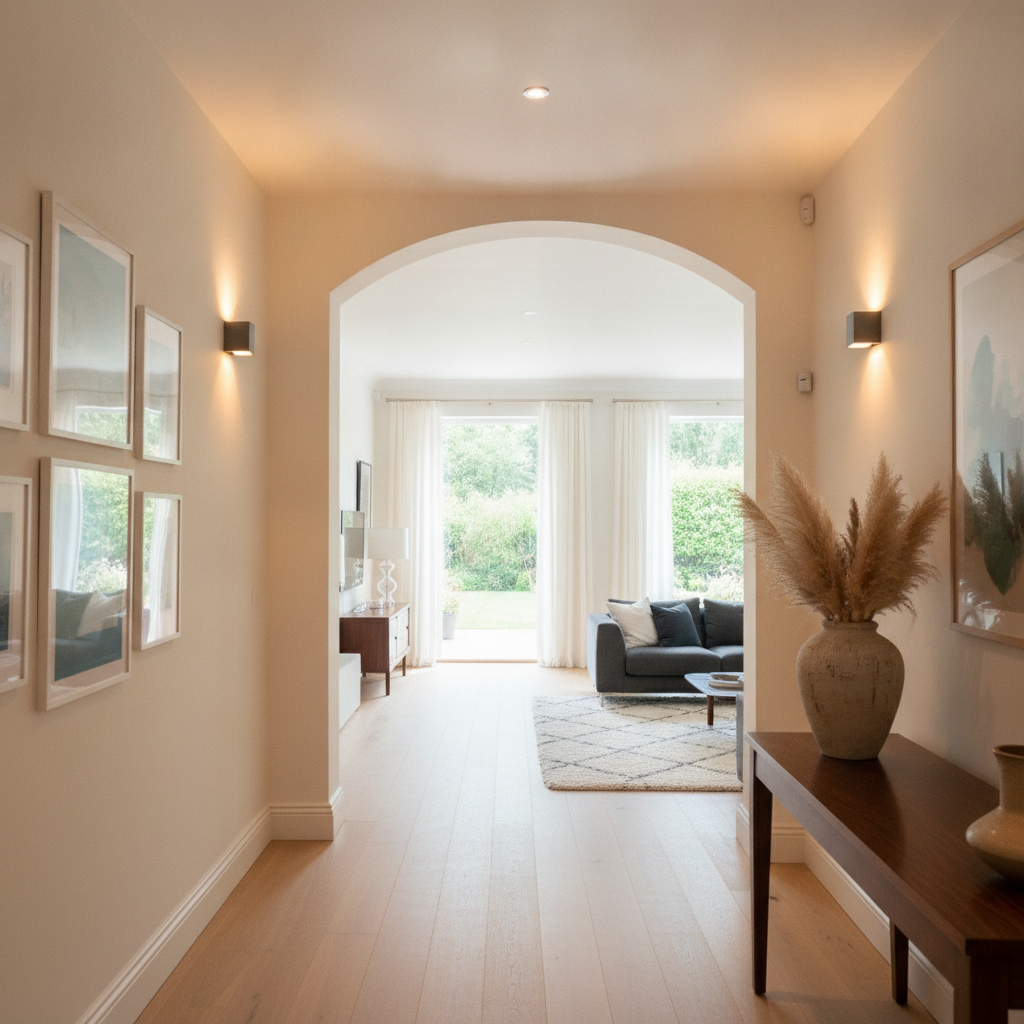
Clutter rarely appears out of nowhere — it migrates. Shoes drift toward the couch, bags land on the kitchen counter, and mail ends up buried under yesterday's jacket. By the time you notice the mess, it has already spread through three rooms. The entryway is where all of that starts, and with a little intentional structure, it's also where all of that can stop.
Creating defined zones in your entryway doesn't require a full renovation or a designer's budget. It requires thinking about what actually comes through your front door every single day and building a system that meets those habits head-on. Here's how to do it.
Assign a Landing Spot for Bags and Backpacks
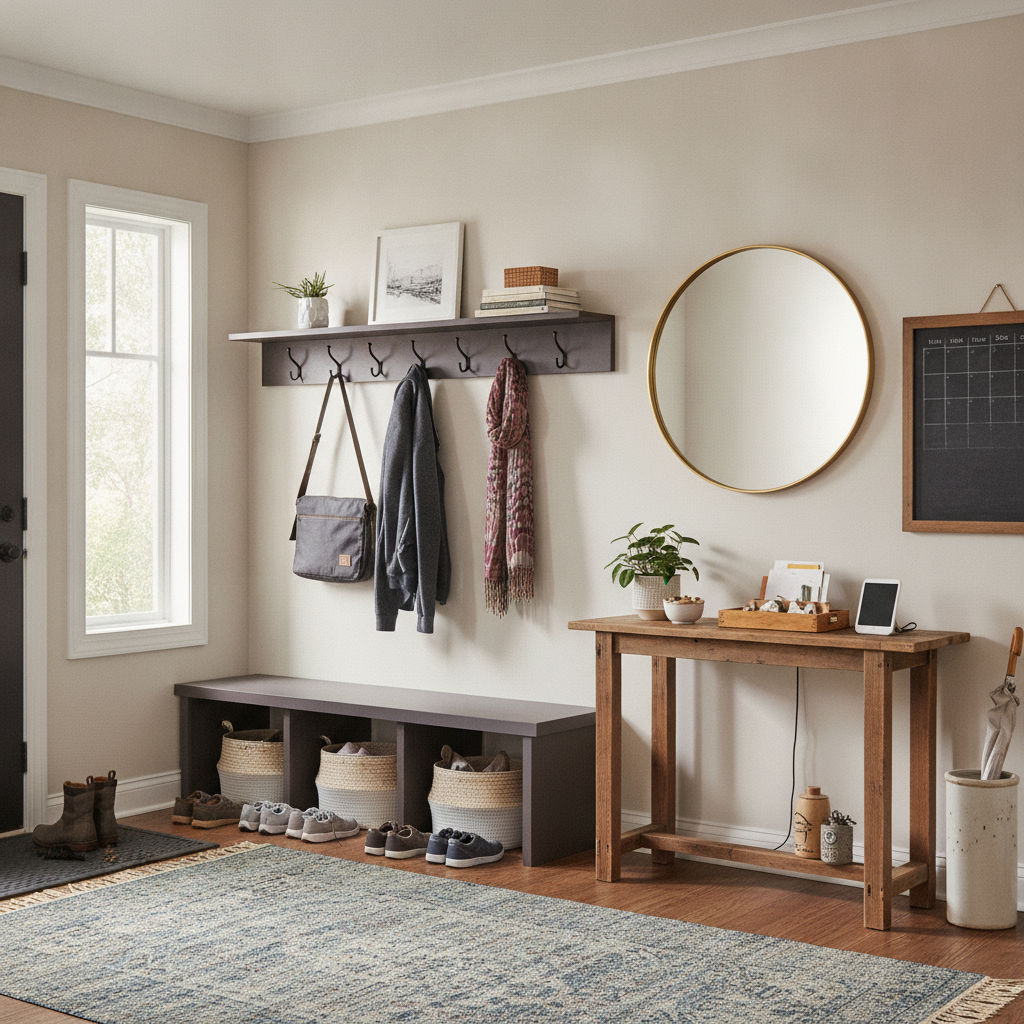
One of the most reliable ways to prevent clutter from spreading is to give bags a permanent home the moment they come through the door. A wall-mounted row of hooks — the kind sold by IKEA under their TJUSIG line or similar — keeps bags off the floor and out of the way without requiring extra furniture. If hooks alone aren't enough, a slim bench with cubby storage underneath handles both seating and stashing in one piece. When every bag has a designated landing spot, the habit of dropping it elsewhere starts to break naturally over time.
Create a Dedicated Shoe Zone That Actually Works
Shoes are the most common entryway offender, and the usual solution — a single mat near the door — almost never holds. A proper shoe zone uses a contained storage method: a tiered rack, a cabinet with a flip-down front, or built-in cubbies if you have the space. The Container Store carries several narrow options that work well in tighter entryways. The key is limiting capacity intentionally. When the zone holds only the shoes your household wears most, overflow goes back to the bedroom closet where it belongs, not scattered across your living room floor.
Use a Catch-All Tray for Small Items That Go Missing
Keys, sunglasses, earbuds, ChapStick — the small things that vanish daily have an easy solution. A single tray, bowl, or divided organizer placed near the door gives every pocket item a consistent home. This isn't about aesthetics, though a leather tray or a ceramic dish from a shop like West Elm can look sharp. It's about building a reflex. When the same items return to the same spot every time, the frantic searching stops and the counter-dumping habit disappears with it. Keep the tray small so it can't become a catch-all for larger junk.
Build a Mail Station Before Paper Takes Over
Unopened mail is one of the fastest ways an entryway becomes chaotic. Without a designated spot, envelopes stack on whatever surface is closest and multiply quietly. A simple wall-mounted mail organizer with two or three slots — one for incoming, one for outgoing, one for items that need action — keeps paper contained from the moment it enters your home. Make it a rule that mail never gets set down anywhere else. Processing it once a week from a fixed spot is far easier than hunting through three rooms trying to find a bill you know arrived last Tuesday.
Add a Return-to-Home Basket for Items That Belong Elsewhere
Every entryway accumulates things that don't belong there but keep appearing anyway — a library book, a borrowed tool, a child's sports equipment. Instead of letting these items colonize the floor, place a single basket or bin in the entryway specifically for things that need to travel somewhere else in the house. Once the basket fills, it becomes the signal to do a quick round of putting things away. This keeps the entryway from acting as a permanent storage zone while still acknowledging that it functions as a transitional space.
Use Vertical Wall Space to Reduce Floor Clutter
Floor space in an entryway is precious and limited. Shifting storage upward — through hooks, floating shelves, or pegboard panels — frees up that footprint without reducing how much the space can hold. A simple ledge shelf above a row of hooks can hold hats, a small basket for gloves, or a plant. Pegboard systems, available from brands like Organized Living, let you configure the layout to fit exactly what your household needs. Vertical storage also makes the entryway feel less cramped, which matters in smaller homes or apartments where the entry is barely wider than the door itself.
Set a No-Pile Rule for the Entryway Floor
This one is behavioral rather than structural, but it matters as much as any organizer you buy. The floor of the entryway should hold only what belongs there — a shoe rack, a mat, maybe a small bench. The moment the floor becomes a staging area for bags, boxes, and random items "just for now," the entire system breaks down. A clear floor signals that the rest of the home is also held to a standard. Stick to the rule consistently for two to three weeks and it becomes automatic. The space will look different, and so will the rooms beyond it.
Review and Reset the Zone Once a Week
Even a well-designed entryway zone needs regular maintenance. A five-minute weekly reset — returning misplaced items, clearing the mail station, and checking that storage isn't overflowing — keeps the system functioning without requiring a major overhaul. Think of it like balancing a budget: small, frequent check-ins prevent the kind of buildup that requires a full cleanup later. Sunday evening or Monday morning tends to work well because it sets a tidy tone for the week ahead and ensures the system is ready before the rush of daily life kicks back in.
A well-organized entryway doesn't just look better — it functions as a filter that protects the rest of your home from the daily influx of stuff. Start with one zone, get it working, and build from there. Small, consistent changes in how you treat the first few square feet of your home can quietly transform how the entire place feels to live in.