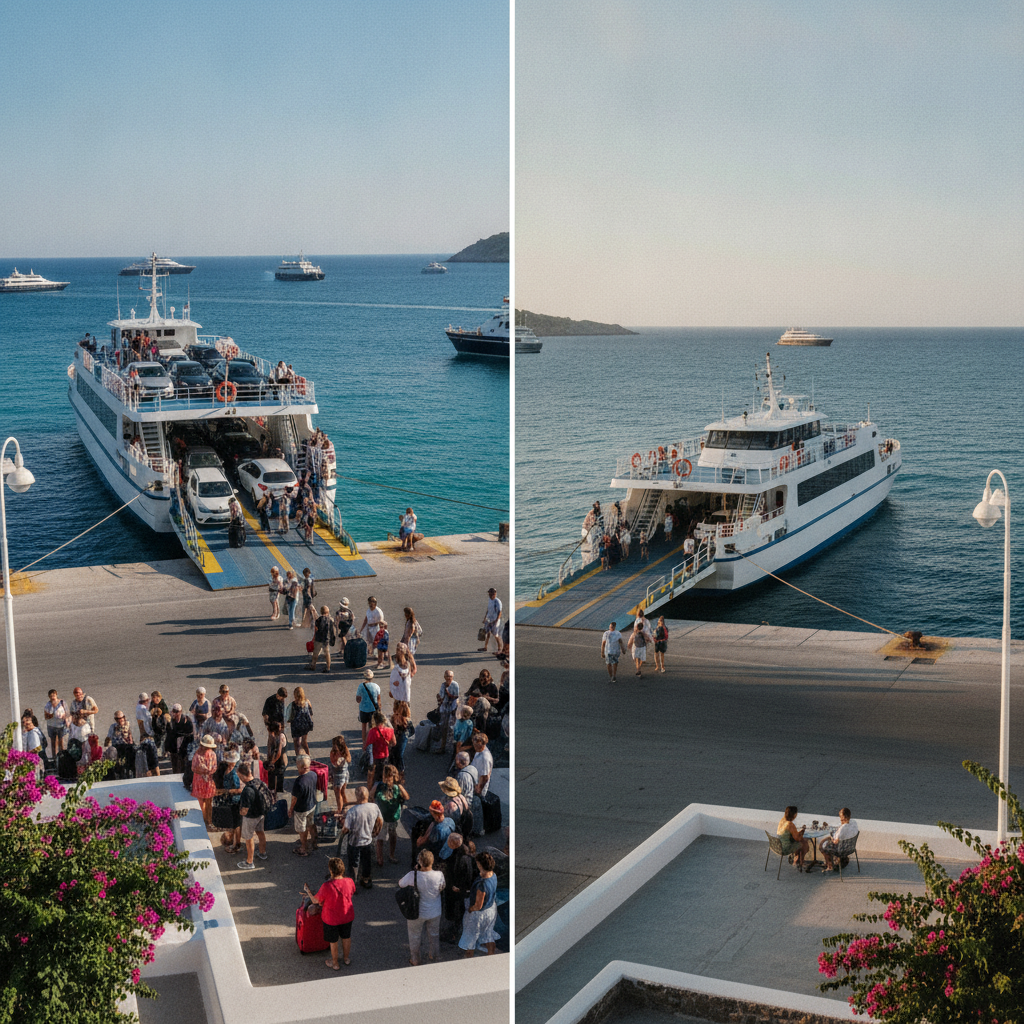
Mediterranean island-hopping sits at that sweet spot between adventure and complete financial chaos. You picture yourself drifting between Santorini, Mykonos, and Crete with a cold drink in hand — and then you check ferry prices in July and suddenly the dream looks a lot more expensive than expected. The gap between what a route costs during peak season versus shoulder season isn't just a small discount. It can be the difference between a trip that wrecks your budget and one that leaves you with money left over for the things that actually matter.
Book the Most Popular Routes Weeks Earlier Than You Think
Routes like Piraeus to Santorini or Split to Hvar get hammered in June, July, and August. Cabin berths on overnight ferries to the Greek islands can sell out a month or more in advance during peak season, and prices on the remaining open-deck tickets climb sharply as departure dates near. If you're committed to traveling in summer, the money move is to book high-demand legs the moment your travel dates are confirmed. The ferry operators — including Hellenic Seaways and Minoan Lines — often release schedules months ahead, and early bookers consistently access lower base fares before dynamic pricing kicks in.
Treat the Athens–Crete Overnight Run as a Hotel Replacement
The overnight ferry from Piraeus to Heraklion or Chania is one of the best value propositions in European travel if you frame it correctly. A cabin berth on this crossing costs a fraction of what a Santorini hotel room runs in peak season, and you wake up on a new island having effectively paid for both transport and accommodation in one. Even during busy stretches, this route runs regularly because it serves residents and freight, not just tourists. Choosing it over a flight also means you skip airport transfer costs at both ends, which quietly adds up.
Shift Your Travel Window by Two to Three Weeks
The Mediterranean travel calendar has a sharper peak than most people realize. The final two weeks of July and all of August represent the most congested — and most expensive — window for ferry travel across Greece, Croatia, and southern Italy. Shifting your trip to early June or mid-September dramatically changes what you'll pay. Ferry companies like ANEK Lines and Jadrolinija post their seasonal pricing online, and comparing the same cabin class across different departure dates takes about ten minutes. That ten minutes can save you a meaningful chunk of your total trip budget across multiple legs.
Prioritize Less-Touristed Islands to Access Cheaper Crossings
The routes everyone books — Mykonos, Santorini, Dubrovnik — carry premium pricing because demand is intense and the tourism infrastructure around them is expensive to maintain. Islands like Naxos, Milos, or Vis in Croatia see a fraction of that demand and correspondingly lower ferry fares. The crossings are shorter, more frequent in some cases, and far less stressful to actually board. Naxos, for instance, is a larger island with more to explore than most visitors expect, and the ferries connecting it to neighboring Cyclades islands run cheaply even in peak months because it serves as a regional hub rather than just a tourist destination.
Use Ferry Booking Aggregators but Check Operator Sites Too
Platforms like Ferryscanner and Directferries do a solid job of consolidating routes and giving you a broad pricing overview across operators. They're genuinely useful for seeing the full picture of your options on a given crossing. The catch is that some operators offer lower direct booking rates that don't always appear on aggregators, and certain cabin classes or promotional fares only show up on the operator's own site. A good habit is to use an aggregator to identify the right route and departure time, then cross-check the operator's direct site before paying. It takes an extra five minutes and occasionally saves you real money.
Build in One Slow Island to Anchor Your Budget
Island-hopping costs accelerate when every destination requires a new ferry ticket, a new accommodation booking, and a new orientation tax on local prices. Picking one island where you stay three or four nights — rather than just one — slows that burn rate considerably. It also opens up day-trip options on smaller local ferries, which are significantly cheaper than the main inter-island routes. Paros in Greece or Korčula in Croatia work well as anchor points: both have enough to do for several days, reasonable accommodation prices by regional standards, and good ferry connections to smaller surrounding islands that you can visit without overnight costs.
Read the Fine Print on What Ferry Class Actually Includes
Deck-class tickets on Greek ferries are genuinely the cheapest option, but they come without a reserved seat or berth, meaning you're finding your own space on a potentially crowded boat. In shoulder season on less busy routes, that's often fine. On a packed August sailing from Piraeus to Santorini, it can mean hours on a crowded upper deck with no guaranteed shade. Cabin categories vary significantly — inside cabins with four berths are dramatically cheaper than two-person sea-view cabins — and understanding exactly what each tier includes helps you make a smarter decision rather than defaulting to the cheapest option and regretting it halfway through a seven-hour crossing.
Factor Port Transfer Costs Into Every Route Comparison
The ferry ticket price is only part of what each leg actually costs. Port transfers — taxis, buses, or water taxis between town centers and ferry terminals — vary wildly between islands and can quietly inflate the cost of a route that looked cheap on paper. On Santorini, for example, getting from Fira to the port at Athinios involves a bus or taxi that adds to every single arrival and departure. Factoring in realistic transfer costs for each leg gives you a much more honest comparison between routes, and sometimes a slightly more expensive direct ferry beats two cheaper connections once ground transport is included on both ends.
Smarter Mediterranean ferry travel isn't about hunting for secret deals that don't exist. It's about understanding how the pricing system actually works — peak versus shoulder timing, route popularity, booking windows, and total leg costs rather than just ticket prices. Start with one or two of these adjustments for your next trip and you'll likely find the budget math looks considerably more manageable. The islands aren't going anywhere, and neither is your ability to reach them without overpaying.