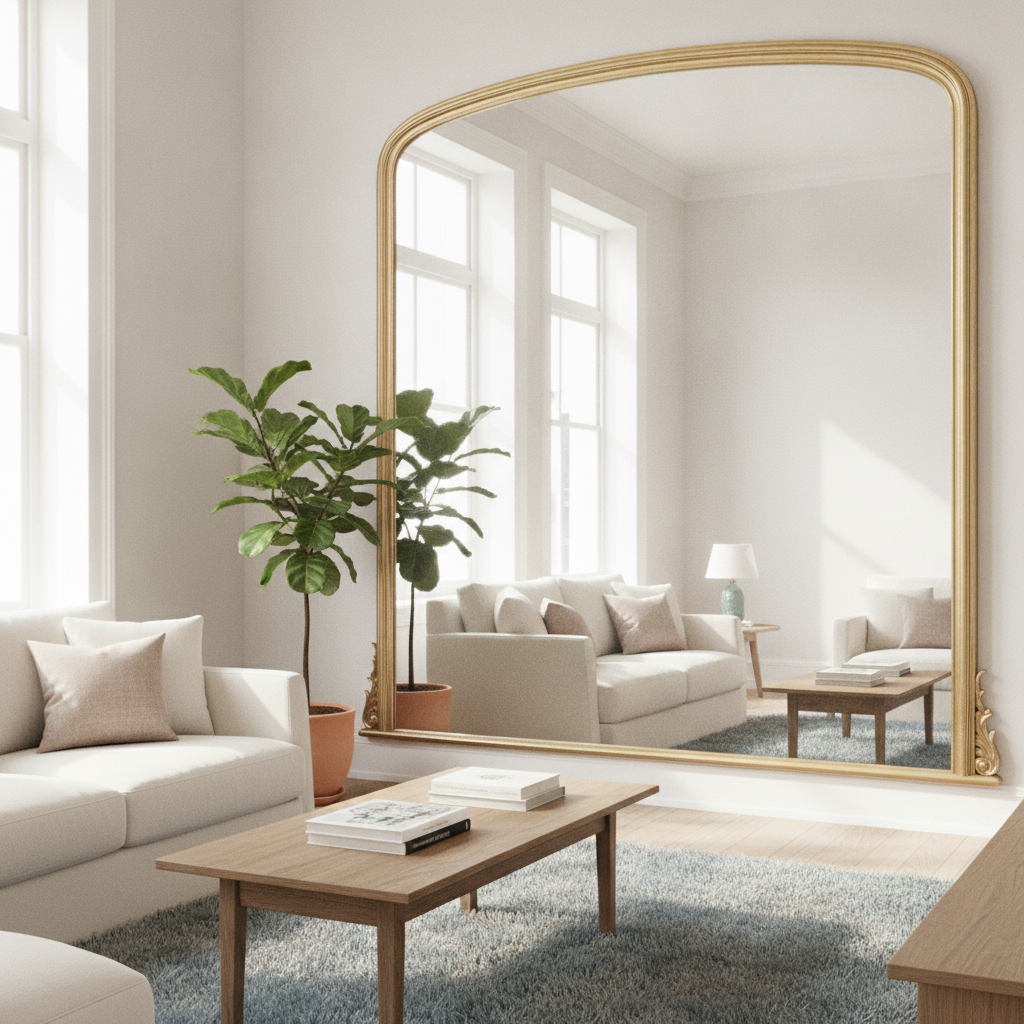
A well-placed mirror can do more for a small living room than a fresh coat of paint or a new sofa. Mirrors have been used in interior design for centuries to create the illusion of depth, bounce light, and make tight spaces feel far more generous than their square footage suggests. If your living room feels cramped or dim, the issue often isn't the room itself — it's what's missing from the walls.
Small living rooms are one of the most common home challenges people face, whether you're in a Brooklyn apartment, a studio flat, or a compact suburban home. The good news is that strategic mirror use is one of the most cost-effective improvements you can make, and it works regardless of your style or budget.
Position Mirrors Opposite Natural Light Sources
The single most impactful thing you can do with a mirror is place it directly across from a window. When a mirror faces natural light, it reflects that brightness back into the room, effectively doubling the sense of openness. The effect is especially noticeable in north-facing rooms that tend to feel dark year-round. Aim for the mirror's center to align roughly with the window's midpoint so the reflection captures the full spread of incoming light rather than just a sliver of the wall above or below it.
Lean Large Mirrors Against the Wall for Depth
Floor-leaning mirrors, like the popular styles sold by West Elm and similar retailers, create a sense of receding depth that hung mirrors sometimes can't match. When a tall mirror leans against a wall, it draws the eye downward and outward, making the floor plane feel longer. This works particularly well in narrow living rooms where furniture is pushed along one wall. Choose a frame at least five feet tall for the effect to register properly — anything smaller tends to just read as decorative rather than spatially transformative.
Use Mirrors to Fake Architectural Features
A pair of mirrors flanking a fireplace or TV unit can mimic the look of alcoves or recessed shelving, tricking the eye into perceiving more structural depth than actually exists. IKEA's Hovet and similar frameless rectangular mirrors work well here because their clean lines don't interrupt the visual flow. Positioning them symmetrically on either side of a focal point creates balance and the impression of a wider, more architecturally interesting wall. This is a particularly smart move in rental spaces where you can't make structural changes.
Avoid Hanging Mirrors Too High on the Wall
One of the most common mirror mistakes in small rooms is mounting them at picture-frame height, where they reflect the ceiling rather than the space you actually live in. For a mirror to expand perceived space, it needs to reflect the room — the furniture, the opposite wall, the light sources. The general rule is to hang the mirror's center at around eye level for a seated adult, roughly 57 to 60 inches from the floor. This ensures the reflection captures the lived-in layer of the room, which is where the illusion of space actually registers.
Group Smaller Mirrors to Create a Gallery Effect
You don't need one large, expensive statement mirror to make a difference. A thoughtfully arranged cluster of smaller mirrors — varying in shape but consistent in finish — creates a mosaic effect that reads as a single visual anchor while still bouncing light around the room. Brass-framed circular mirrors from brands like Anthropologie or Target's Threshold line work well grouped in odd numbers. The key is spacing them close enough that they read as a collection rather than separate objects scattered randomly across the wall.
Place Mirrors Near Artificial Light Sources After Dark
Daytime natural light is only part of the equation. In the evening, small living rooms can feel particularly boxed in because artificial light doesn't travel as far or as softly. Positioning a mirror near a floor lamp or wall sconce allows it to amplify that light source and carry warmth further into the room. A mirror placed at a slight angle to a lamp rather than directly opposite it will scatter light more diffusely, creating a glow rather than a harsh, direct reflection. This is an easy and affordable adjustment that dramatically changes how a room feels after sunset.
Be Selective About What the Mirror Reflects
A mirror that reflects a cluttered corner, a blank wall, or an unattractive view does more harm than good — it multiplies the problem. Before committing to a placement, hold the mirror up and look at what it captures. Ideally, it should reflect something appealing: a window, a plant, a styled bookshelf, or a well-lit seating area. In a room designed with some intention, like spaces influenced by the Scandinavian or Japanese minimalist approaches, the reflection becomes part of the decor rather than an afterthought. Take a few minutes to audit the view before you hang anything.
Use Mirrored Furniture as a Subtle Alternative
If wall space is limited or you'd rather not commit to hanging, mirrored furniture surfaces offer a quieter but still effective alternative. A mirrored side table, a glass-front cabinet, or even a tray with a reflective surface adds the same spatial trickery at a smaller scale. These pieces scatter light without demanding a dedicated wall, which makes them particularly useful in living rooms where art, shelving, or windows already dominate the vertical space.
Mirrors are one of those rare home solutions that look intentional, cost relatively little compared to renovation, and deliver results that are genuinely visible from the moment you make the change. Start with one placement — ideally opposite your best light source — and see how the room shifts. You might be surprised how much space was hiding there all along.