Retail pricing for outdoor furniture is far more predictable than most shoppers realize — and once you understand the pattern, you can stop paying full price almost entirely. Stores don't randomly slash tags on patio sets and lounge chairs. They follow well-established seasonal rhythms driven by inventory turnover, warehouse space, and incoming stock timelines. If you know when those windows open and how long they last, you can time your purchases with confidence instead of crossing your fingers at a sale rack.
Understand Why Clearance Happens When It Does
Retailers bring in outdoor furniture inventory months before the season actually peaks. By late summer, they've already committed to next season's stock, which means current-year pieces need to move out — fast. That urgency is your opportunity. The markdown cycle isn't random generosity; it's a space-clearing necessity. Stores like Wayfair, Home Depot, and Target all follow this rhythm because their buying cycles are locked in well ahead of time, leaving little room to carry over bulky patio inventory into the colder months.
The First Window: Late August Through September
The most reliable clearance window for outdoor furniture opens in late August and runs through most of September. This is when warm-weather demand softens noticeably, especially in northern regions where the season feels like it's winding down. Retailers start pulling floor space for fall and holiday product lines, and that creates real pressure to reduce existing patio stock. You'll often see initial markdowns of 30 to 40 percent in this first wave — enough to make a meaningful difference on big-ticket pieces like dining sets or sectional loungers.
Timing Your First Pass Through Inventory
If you spot something during the late August push, don't assume you need to grab it immediately. Prices tend to drop further as the weeks progress, but popular items — especially complete sets in neutral colors — do sell out. A practical approach is to identify what you want in early August, add it to a wishlist or saved cart on platforms like Wayfair or Amazon, and then monitor price movement as the season closes. Many of these platforms will notify you of price drops on saved items automatically, which takes the guesswork out of it.
The Second Window: October Into Early November
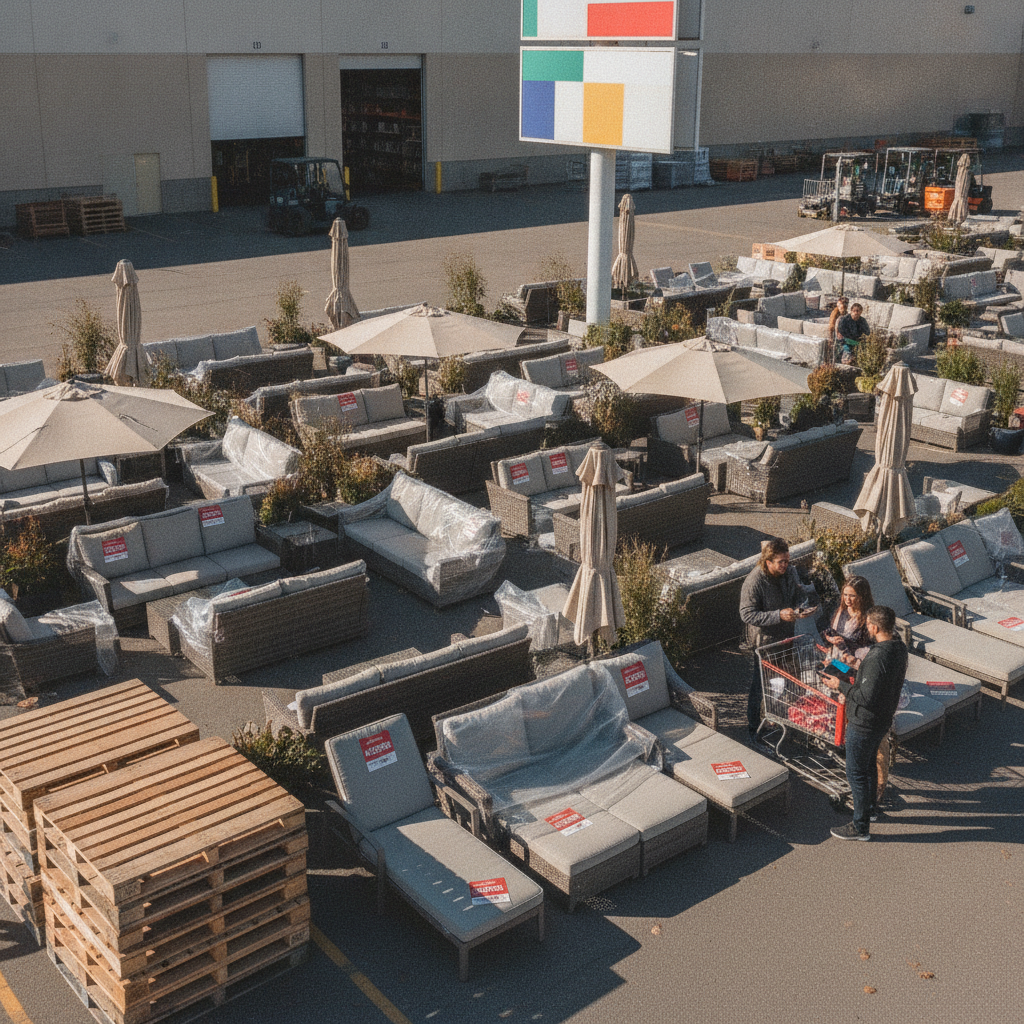
For shoppers willing to be patient, October brings a second and often deeper clearance window. By this point, retailers are highly motivated to clear the last of their outdoor inventory before holiday merchandise dominates the floor. Discounts in this range can reach 50 to 60 percent or more on remaining pieces. The trade-off is selection — you're working with whatever didn't sell in the first wave. However, if your taste runs toward classic or neutral styles, there's usually still plenty to work with at this stage.
What to Watch for in October Sales
Big-box retailers like Home Depot and Lowe's frequently consolidate what's left into dedicated clearance sections, both in-store and online, during October. These sections are worth checking weekly because new items get added as floor display models get pulled. Display pieces often come with small cosmetic imperfections but are otherwise fully functional — and they tend to be priced aggressively because stores want them gone before restocking for the next season. If you're flexible on perfection, this is where some of the best value lives.
The Overlooked Winter Window: January and February
Few shoppers think to look for outdoor furniture in January, which is exactly why this window can be so rewarding. Some retailers receive returns from the holiday gifting season, and brick-and-mortar stores may have held onto a few floor models or overstock pieces through the fall. Online retailers in particular tend to quietly restock clearance sections during this period. Prices here can be steep discounts on already-reduced items, and since you won't be using the furniture until spring anyway, buying in January costs you nothing in terms of timing.
Planning Your Spring Setup Now
Buying in winter means you have all the time you need to plan your outdoor space thoughtfully. Use apps like the IKEA app or Pinterest to visualize how new pieces will fit your space before committing. Ordering well ahead of warm weather also insulates you from the price spikes that happen in March and April when demand surges back and clearance inventory is long gone. Retailers know shoppers get anxious as grilling season approaches, and prices reflect that renewed urgency.
Build a Multi-Season Purchase Strategy
The smartest approach isn't to buy everything at once — it's to stagger your purchases across cycles. Buy your anchor piece, like a dining table or sofa set, during the late summer window when selection is still strong. Then fill in accent pieces like side tables, planters, or outdoor rugs in October or January when those smaller items are deeply discounted and easier to ship. This approach lets you build a complete outdoor space without absorbing the full cost in a single season.
As more retailers invest in real-time price-tracking tools and personalized sale notifications, timing outdoor furniture purchases is only going to get easier. Platforms are already making it simpler to set price alerts and compare clearance pricing across multiple stores in a single view. The fundamental retail cycle isn't going anywhere — stores will always need to clear seasonal inventory — but the tools available to you as a shopper are sharpening. Start mapping your outdoor space now, build your wishlist before the season ends, and let the calendar work in your favor.