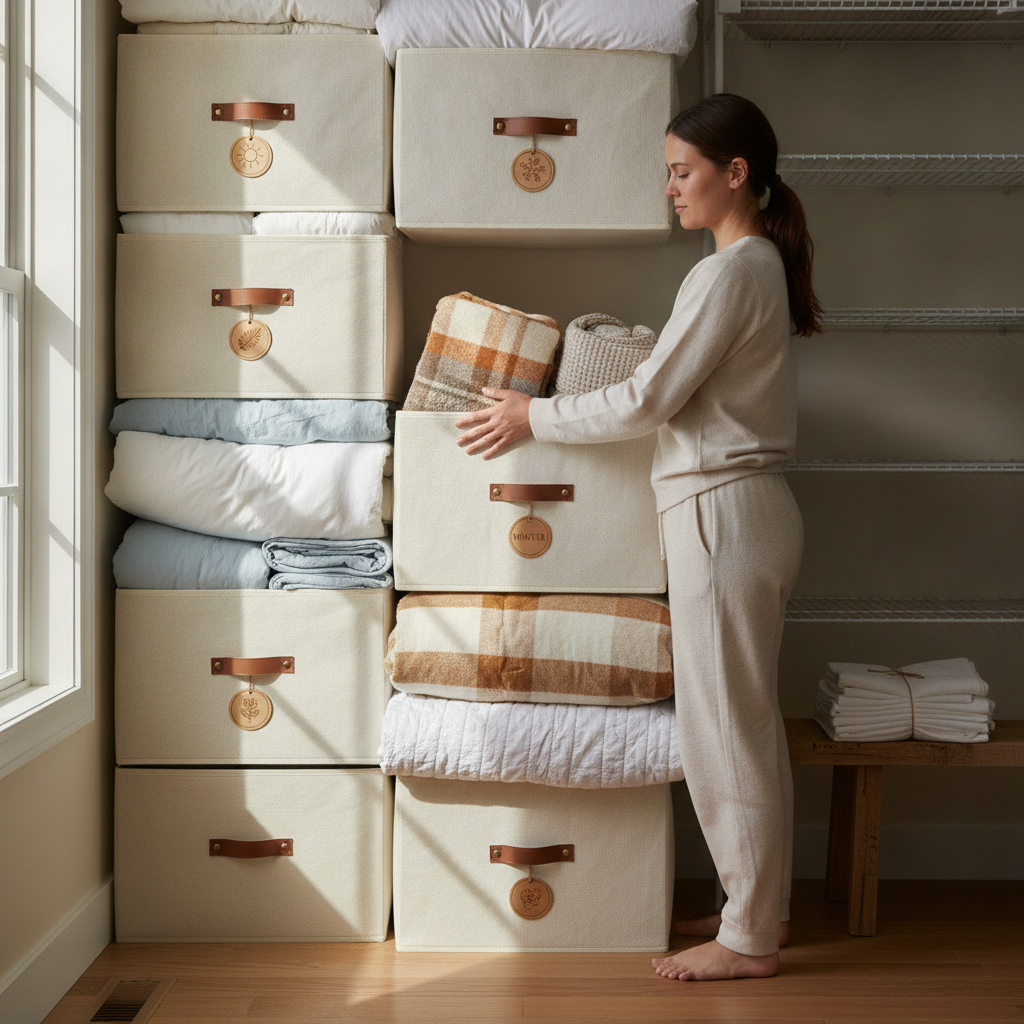
Linen closets have a way of becoming one of the most chaotic spots in any home. Flannel sheets get stuffed behind lightweight duvet covers, spare pillowcases fall to the floor every time you reach for something, and by mid-November you're pulling out half the shelf just to find your heavier winter set. It's a frustrating cycle — and it gets worse the more bedding you accumulate over the years.
The good news is that a simple seasonal bedding box system can solve most of this without requiring a major renovation or a trip to buy expensive shelving. The idea is straightforward: instead of keeping all your bedding in one shared space year-round, you separate it into active and stored sets that rotate every few months. The system takes a little setup time upfront, but once it's running, it genuinely makes every sheet change easier and keeps your closet from turning into a fabric avalanche.
Why Mixing All Seasons Together Creates the Problem
Most people store their sheets the way they store everything else — by stuffing and hoping for the best. When summer percale, mid-weight cotton, and heavy flannel all share the same shelf, you end up constantly moving items you don't need to reach items you do. This isn't just inconvenient; it also puts unnecessary stress on your linens over time. Fabrics get compressed, edges fray from repeated handling, and pieces that should last a decade start looking worn within a few years because they're being shuffled around constantly.
Separating your bedding by season means each set only gets handled when it's actually in rotation. The linens you're not using stay properly folded, stored flat or in a box, and protected from light and dust. This alone extends their lifespan considerably.
Choosing the Right Storage Containers for Each Season
The container you choose matters more than it might seem. Vacuum storage bags — brands like Spacesaver or Amazon Basics make reliable options — compress bulky duvets and comforters down to a fraction of their normal size, which is ideal for the sets you won't touch for several months. These work especially well for thick winter bedding during warm months when closet space is at a premium.
For sets that rotate more frequently — like your spring and fall linens — a breathable cotton storage bag or a lidded linen box is a better choice. Airtight compression isn't always ideal for natural fiber fabrics that need a little airflow to stay fresh. Cube-style fabric bins from IKEA's KALLAX-compatible range work well here and stack neatly on upper shelves or in a spare room corner. Label each container clearly by season and bed size, and your future self will thank you every time you swap out a set.
Building the Four-Season Rotation Schedule
A four-rotation system tracks naturally with the calendar and makes the whole process feel intentional rather than reactive. Think of it in terms of transitions rather than strict monthly swaps. The shift from winter to spring bedding typically works best in late March or early April, when the overnight temperatures start staying above the point where flannel feels necessary. The summer swap follows in late May or early June. Fall sets come back out in September, and your heaviest winter bedding returns in late October or November.
Setting a reminder in your phone calendar — apps like Google Calendar or Todoist are both useful for recurring seasonal tasks — makes it easy to stay consistent without relying on memory. Linking the swap to another seasonal habit, like changing your HVAC filter or rotating your wardrobe, helps it become automatic rather than something you remember six weeks too late.
How to Fold and Store Linens So They Stay Neat
The ranger roll method, popularized by military packing techniques, works surprisingly well for flat sheets — rolling them tightly produces a compact, uniform shape that doesn't unfold the moment you reach into the bin. For fitted sheets, the classic fold-inside-itself technique keeps elastic edges from stretching out over months of storage. Pillowcases can be folded into thirds and tucked into one of the matching pillowcases to create a tidy packet — this also keeps sets together so you're never hunting for a match when it's time to make the bed.
Store heavier items at the bottom of the bin and lighter ones on top. If you're using a lidded box, place a single cedar block or a small sachet of dried lavender inside before closing it. This keeps stored linens smelling fresh and discourages moths from getting comfortable in your flannel sets.
Making the System Work in Small Homes
Limited storage space is the most common reason people resist this kind of system, but the seasonal box approach actually works better in small homes than traditional all-in-one closet storage. Because you're only keeping one active set per bed accessible at any given time, the closet shelf requirement drops significantly. The stored sets can live under the bed in low-profile bins, on a high shelf in a spare room, or at the top of a wardrobe with a step stool nearby.
The Container Store's underbed storage options and IKEA's STUVA series both offer flat, wheeled bins that slide easily and hold a full queen set without taking up usable floor space. In studio apartments or compact bedrooms, this approach can reclaim surprising amounts of closet real estate for things that actually need to be within arm's reach every day.
Timing Your Linen Purchases Around the Rotation
One underappreciated benefit of running a seasonal bedding system is that it naturally aligns you with the best times of year to buy new linens. January white sales — a retail tradition that major retailers like Macy's and Pottery Barn still follow — offer some of the deepest discounts on sheet sets, duvet covers, and pillowcases of the entire year. If you know your summer rotation needs refreshing, January is the time to buy, not June when you're already sweating under the wrong weight of cover.
Similarly, end-of-season clearance on flannel and heavyweight bedding typically hits in February and March, just before retailers rotate their floor stock. Buying a season ahead, storing the new purchase in your labeled box, and rotating it in when the time comes means you're always working with fresh linens without ever paying full price.
A well-organized seasonal bedding box system isn't just a closet fix — it's a practical approach to keeping your home running smoothly without the creeping chaos that builds up when everything is stored together and nothing has a clear home. By separating your linens into active and stored sets, choosing the right containers, and linking your rotation to the natural rhythm of the year, you make the process feel effortless rather than like another chore. Start with just one bed and one season swap, and let the habit build from there.