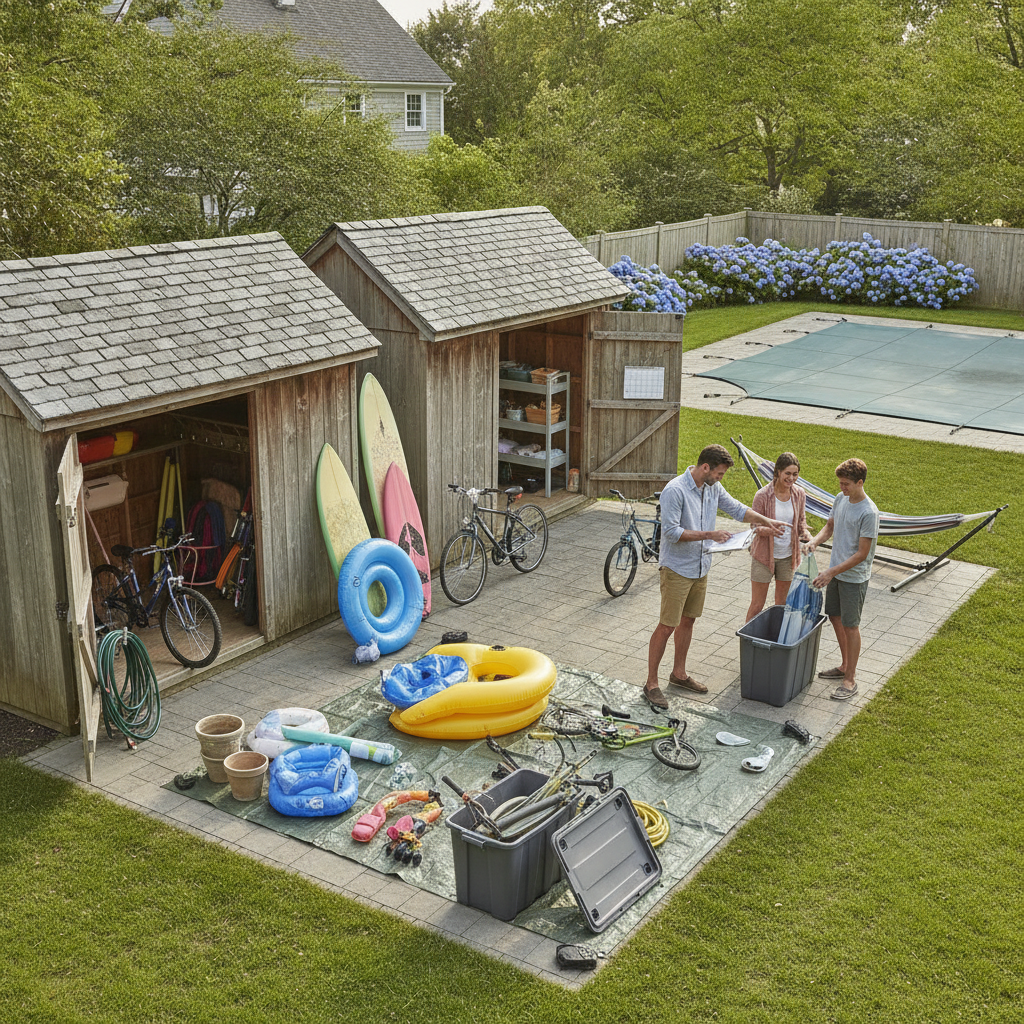
Every spring, the same scene plays out in backyards across the country: a tangle of garden hoses draped over last year's folding chairs, a lawnmower wedged behind a bag of sand that was never used, and a collection of tools whose purpose has become genuinely uncertain. The accumulation isn't laziness — it's simply what happens when outdoor equipment gets added seasonally without a system for reviewing what's already there. By the time summer arrives and the yard becomes an active living space again, the storage situation has quietly grown into a real inconvenience.
Why an Annual Audit Changes More Than Just the Clutter
Outdoor storage tends to operate on a kind of seasonal amnesia. Equipment goes in during autumn, and by spring it's been mentally filed under "handled" — even when it hasn't been. A proper storage audit breaks that cycle by treating outdoor gear the same way a smart shopper treats a pantry: knowing exactly what's on hand before buying more, replacing, or reorganizing. The financial case is surprisingly strong. Duplicate tools, deteriorated supplies, and gear purchased to solve a problem that was never actually a storage problem all represent spending that could have been avoided with a clearer picture of what's already stored and in what condition.
The timing of the audit matters considerably. Running through the process in early spring — ideally before the first major outdoor project of the year — ensures that equipment is assessed while there's still time to repair, donate, or replace items before peak-season demand drives prices up. Hardware stores and home improvement retailers like Home Depot and Lowe's typically begin their seasonal clearance cycles in late winter, which means an early audit positions households to take advantage of off-season pricing rather than scrambling at full retail in June.
Setting Up the Audit in Three Practical Phases
The most effective outdoor storage audits follow a structured sequence rather than a single sweep. Starting with a full pull-out phase — removing every item from sheds, garage corners, and deck storage boxes — creates an honest picture of volume. It's a step most people skip because it feels like making the problem worse before making it better, but an honest inventory is impossible without seeing everything at once. Items should be grouped into categories: power equipment, hand tools, seasonal décor, outdoor furniture accessories, garden supplies, and anything miscellaneous.
From there, a condition assessment for each category determines what stays, what needs attention, and what should leave the property entirely. Tools with cracked handles, hoses with irreparable kinks, and furniture cushions with mold damage are the kinds of items that tend to survive audit after audit simply because no one formally decided to remove them. An app like Sortly, which is designed for home inventory management, can be genuinely useful at this stage — allowing photos and condition notes to be attached to each item so the full picture is captured digitally rather than held together by memory alone.
The third phase is reorganization with intention. This means assigning every item a specific home based on how frequently it's used and how closely it needs to be accessed. Daily-use tools like trowels and pruning shears belong within arm's reach. Seasonal items like holiday lighting or winterizing supplies belong in labeled bins toward the back or overhead. The Container Store's outdoor storage line and similar modular systems from IKEA's HEJNE shelving range offer scalable options for implementing this kind of zone-based organization without committing to an expensive full renovation of the storage space.
Connecting the Audit to Smarter Buying Decisions
One of the clearest benefits of a seasonal outdoor storage audit is what it prevents: unnecessary purchasing. When the contents of a garage or shed are vague, it's easy to assume a missing item needs replacing rather than simply locating. A full audit typically surfaces at least a few items that were genuinely forgotten — a hand cultivator, a set of bungee cords, an extra sprinkler head — that would otherwise have been purchased again. Over several years, these small prevented purchases add up meaningfully.
The audit also creates a clearer shopping list for what's actually needed. Rather than browsing a hardware store without a clear sense of gaps, a household can enter the season with a specific, prioritized list. Platforms like TaskRabbit can be helpful if the reorganization phase requires actual shelving installation or a larger-scale garage overhaul that goes beyond a DIY weekend project. Having the audit completed first means any professional help engaged is targeted and efficient rather than open-ended.
It's worth treating the audit's findings as a genuine data point when planning outdoor improvements for the season ahead. If the process reveals that half the storage space is consumed by equipment that's only used twice a year, that's a signal to explore wall-mounted storage solutions, overhead hoisting systems, or a dedicated garden shed rather than simply restacking the same gear in the same corner. The audit doesn't just tell you what you have — it tells you whether the storage system you have is actually working.
There's something clarifying about pulling everything into the open before summer takes hold. The yard becomes a more functional place when the equipment supporting it is understood, accessible, and genuinely in use — and that clarity tends to extend into how the season is spent overall. Starting the process now, before the first warm weekend fills the calendar, is the kind of low-effort, high-return move that makes the months ahead feel a little more under control.