Bare walls have a way of making even a well-furnished room feel unfinished. You can arrange the furniture perfectly, hang a few pieces of art, and still walk in every day feeling like something is missing. That missing element is often depth — the sense that a wall has dimension, character, and intention behind it. The good news is that you don't need a fresh coat of paint or a roll of wallpaper to get there. Texture layering is one of the most underused tools in home decorating, and it works beautifully across styles from minimalist to maximalist.
Start With a Tactile Base Layer
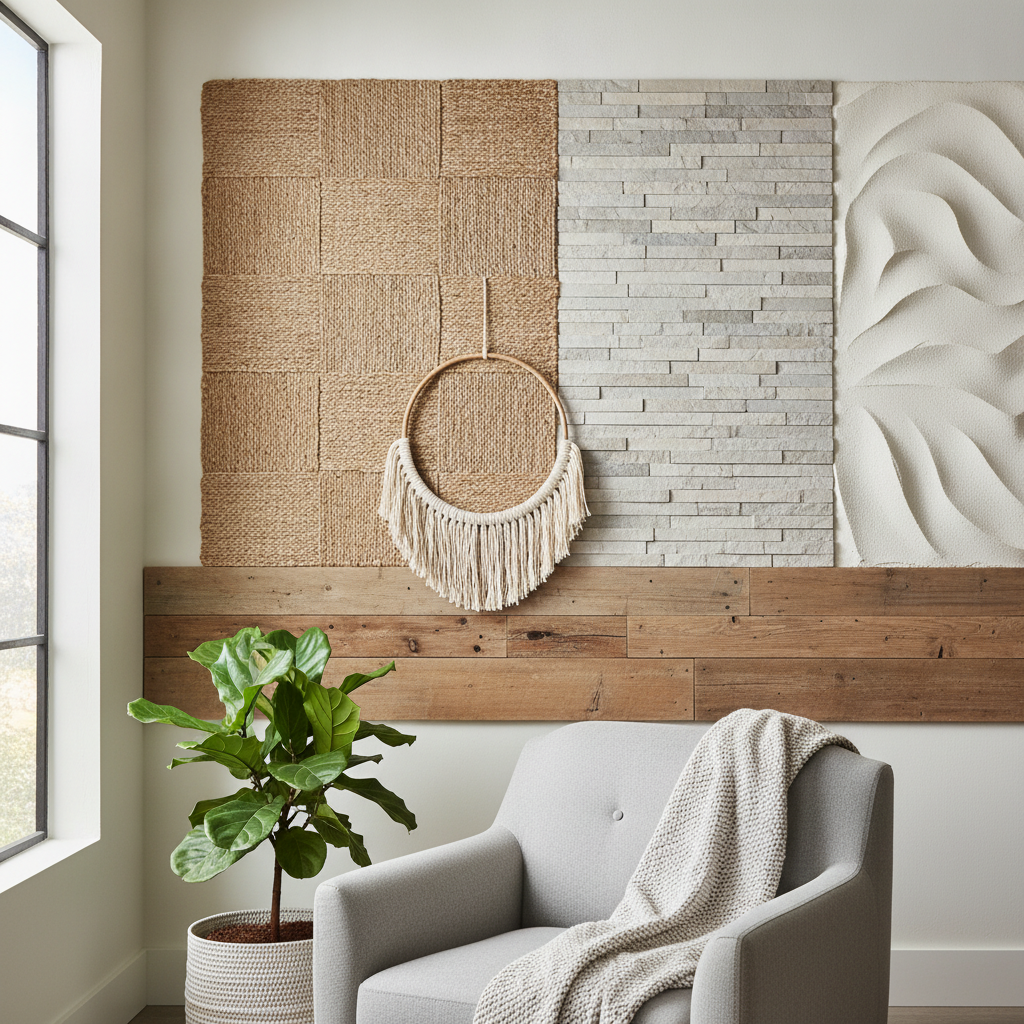
Think of your wall as a canvas that needs a foundation before anything else goes on it. A tactile base layer could be as simple as wood shiplap planks, reclaimed barn boards, or tongue-and-groove paneling installed horizontally or vertically to create immediate visual movement. Brands like Stikwood offer peel-and-stick real wood panels that require no professional installation and no damage to existing walls. This approach works especially well in living rooms and bedrooms where you want warmth without committing to a permanent renovation. The base layer sets the tone for everything that comes after it.
Layer Woven and Fabric Wall Hangings Strategically
Once you have a base material on the wall, fabric elements add softness and contrast that hard surfaces alone can't provide. Woven tapestries, macramé panels, and stretched textile art all introduce organic texture that catches light differently depending on the time of day. The key is proportion — a single large piece anchors the space, while a cluster of smaller woven pieces at varying heights creates a gallery-style effect. Shops like Anthropologie and independent artisan marketplaces carry handmade textile wall pieces in neutral tones that sit comfortably against wood or plaster. Avoid spacing them too evenly, since slight asymmetry reads as intentional rather than random.
Use Dimensional Wall Panels for Geometric Interest
For rooms that lean modern or architectural, three-dimensional wall panels offer a striking middle ground between art and material. These panels — often made from MDF, bamboo, or plant-based composites — come in geometric patterns that cast subtle shadows as light moves through the room, creating the illusion of much more depth than actually exists. ROOMA and Fasade both manufacture affordable panel systems that can be installed in sections across a feature wall without any permanent adhesive. The effect is dramatic during the day and even more interesting in the evening with directional lighting pointed at the surface.
Introduce Natural Stone or Brick Veneer Panels
Faux stone and thin brick veneer panels have come a long way from the plasticky versions of earlier decades. Today's options use real stone that has been sliced thin enough to apply like tile, giving you the authentic texture of a stone wall without the structural requirements. These work particularly well in entryways, kitchens, or around a fireplace where the material feels contextually appropriate. GenStone is one brand that produces realistic-looking stacked stone and brick veneer panels specifically designed for interior walls. Installation requires basic adhesive and grout rather than any special masonry skills, making this a genuine weekend project for most homeowners.
Add Depth with Shadow Box Grids and Wall Molding
One of the most elegant and cost-effective ways to add dimension to a wall is through applied molding arranged in a grid or geometric pattern — often called a shadow box or picture frame wall. When light hits the raised edges of the molding, it creates subtle shadows that give the flat wall a completely different visual weight. You can source flexible polyurethane molding strips from home improvement stores and cut them to size with a standard miter saw. The finished look photographs beautifully and has the kind of architectural presence usually associated with older, more expensive homes. Painted the same color as the wall, it reads as sophisticated rather than decorative.
Mix Materials at Different Heights
Texture layering becomes most effective when you think vertically. A lower third of the wall in one material — say, a board and batten wood treatment — paired with something entirely different in the upper two thirds creates a visual break that mimics the look of expensive custom design. This technique works particularly well in dining rooms and hallways where wall space is tall and relatively uninterrupted. The transition point between materials can be marked with a thin strip of metal trim or a simple wooden ledge, which also adds a practical surface for small objects. Mixing rough with smooth, or matte with slightly reflective, keeps the layering from feeling flat.
Bring in Oversized Mirrors and Metallic Surfaces
Mirrors and brushed metallic panels don't just reflect light — they add a layer of surface complexity that changes with the angle of view and the time of day. Leaning a large raw-edge mirror against a textured wood wall creates a layered look that feels collected and deliberate. Metallic panels, particularly in aged bronze or antite brass finishes, can be used sparingly as accents within a larger textured scheme without overwhelming the space. These reflective elements serve as a counterpoint to the organic, matte textures around them, and that contrast is what gives the overall wall composition its visual energy.
Anchor Everything with Thoughtful Lighting
No texture layering scheme reaches its full potential without the right lighting. Directional wall sconces, picture lights, and even clip-on spotlights angled toward a textured surface will dramatically increase the shadow play and depth you've worked to create. The goal is to graze the light across the surface rather than flood it from above — grazing light catches every ridge, groove, and raised edge and turns a daytime wall into something completely different at night. Battery-powered LED strip lights placed behind panels or along ledge details can add a glow effect without any electrical work. Lighting is the finishing layer in a texture scheme, and skipping it leaves a significant amount of visual impact on the table.
Building depth into your walls without paint or wallpaper is less about budget and more about thinking in layers. Start with one material you genuinely love, then build outward from there — adding contrast in texture, scale, and surface quality until the wall feels like it belongs. Even one well-executed layer makes a noticeable difference. Pick the idea that excites you most and start there.