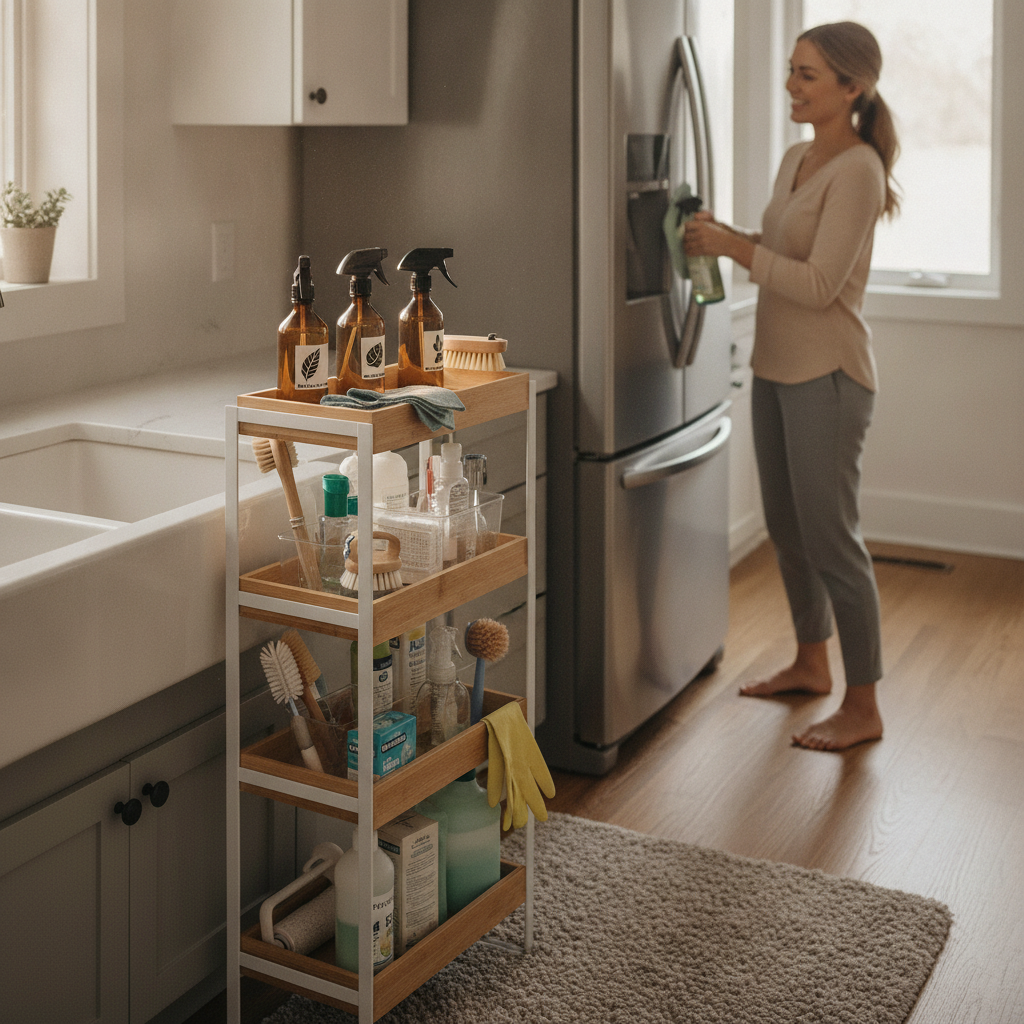
Cleaning the house takes longer than it should for most people — not because there's too much to clean, but because the process itself is inefficient. You walk to the cabinet under the sink, grab what you think you need, realize the bathroom spray is still in the other room, backtrack, and lose five minutes before you've scrubbed a single surface. Multiply that across a full cleaning session and you've added a significant chunk of wasted time to what should be a straightforward task. A tiered cleaning caddy system solves this by organizing your supplies around how you actually move through your home, rather than where things happen to be stored.
Group Your Supplies by Zone, Not by Product Type
Most people store cleaning products together by category — all the sprays in one spot, sponges in a drawer, microfiber cloths in another. The problem is that when you clean, you don't work by category. You work by room. A tiered caddy system flips this logic: instead of organizing around product type, you organize around the zones you clean. Your bathroom caddy holds everything the bathroom needs. Your kitchen caddy holds everything the kitchen needs. You pick it up, carry it in, and everything is already there. Brands like OXO and Casabella make caddies with divided compartments that keep bottles upright and cloths accessible without digging.
Build a Primary Caddy for High-Traffic Rooms
Start by building one well-stocked caddy for the rooms you clean most often — typically the kitchen and main bathroom. This primary caddy should contain a multi-surface spray, a glass cleaner, a scrubbing sponge, two microfiber cloths, and a small roll of paper towels. Keep it compact enough to carry in one hand. The goal is to grab it once and not put it down until the room is done. When everything you need is already in the caddy, you stop making trips back to the supply closet mid-task, which is where most cleaning sessions quietly fall apart.
Create a Secondary Caddy for Deeper Cleaning Tasks
Your primary caddy handles weekly maintenance, but some tasks need heavier products — toilet bowl cleaner, grout scrubbers, descaling spray. Rather than mixing these in with your everyday supplies, store them in a separate secondary caddy that you pull out less frequently. This keeps your primary caddy light and easy to carry while ensuring the tougher products are organized and ready when you need them. A monthly deep clean becomes much faster when you're not hunting through a cabinet full of half-used bottles to find the one thing you need.
Use a Tiered Caddy for Multi-Level Homes
If your home has more than one floor, consider keeping a small duplicate caddy on each level. This seems like an extra expense, but it eliminates the single biggest time drain in multi-story cleaning: carrying supplies up and down stairs. Products like Method and Mrs. Meyer's come in smaller spray bottles that are affordable enough to duplicate without much cost. Keep one set of essentials upstairs and one downstairs. You'll find that cleaning the upper floor stops feeling like a project that requires preparation and starts feeling like something you can do in a spare fifteen minutes.
Label Everything Inside the Caddy
When multiple people in a household share cleaning duties, supplies get moved, replaced, or used up without being restocked. Labeling the inside of each caddy — even just with a strip of masking tape noting what belongs where — creates a visual checklist that makes restocking automatic. You see at a glance what's missing before your next cleaning session, not halfway through it. Simple labeling tools from brands like Dymo make this easy and reasonably tidy-looking. A labeled caddy also helps when someone else in the household takes over cleaning, because the system communicates itself without explanation.
Keep a Restocking List Attached to the Caddy
One of the quietest time wasters in a cleaning routine is discovering mid-session that a product has run out. You either stop and find a replacement or you skip that surface entirely and come back later — neither of which is efficient. Attach a small notepad or dry-erase card to your primary caddy where anyone can jot down what needs replacing. When something runs low, it goes on the list immediately. This habit keeps your caddy perpetually stocked and removes the mental overhead of trying to remember what to buy before your next grocery run.
Declutter the Caddy Every Season
Cleaning caddies have a way of accumulating products that don't get used — a specialty cleaner someone bought once, a sponge that's past its useful life, a spray bottle nearly empty but not quite. Every season, spend five minutes pulling everything out of each caddy, discarding what's expired or worn, and reassessing whether each product is earning its space. A leaner caddy is a faster caddy. When every item in it has a clear purpose and gets used regularly, you stop reaching past things to find what you actually need. Fewer products, used consistently, clean better than a crowded collection used sporadically.
Match Cloth Colors to Room Functions
This tip sounds minor but pays off quickly in practice. Assign specific microfiber cloth colors to specific rooms or surfaces — for example, blue for bathrooms, yellow for kitchens, green for glass and mirrors. Brands like E-Cloth and Buff sell microfiber cloths in multi-color packs designed exactly for this purpose. Color coding removes the guesswork about whether a cloth has been used somewhere you wouldn't want cross-contamination, and it makes putting the right cloth back in the right caddy completely automatic. When the system is this clear, other household members can follow it without any instruction.
A tiered cleaning caddy system isn't complicated, and it doesn't require a big investment to get started. A couple of well-organized caddies, some basic color coding, and a restocking habit can realistically cut your weekly cleaning time down considerably — not by doing less cleaning, but by eliminating all the small inefficiencies that quietly add up between tasks. Start with just your primary caddy this week, stock it thoughtfully, and notice how differently the next cleaning session feels.