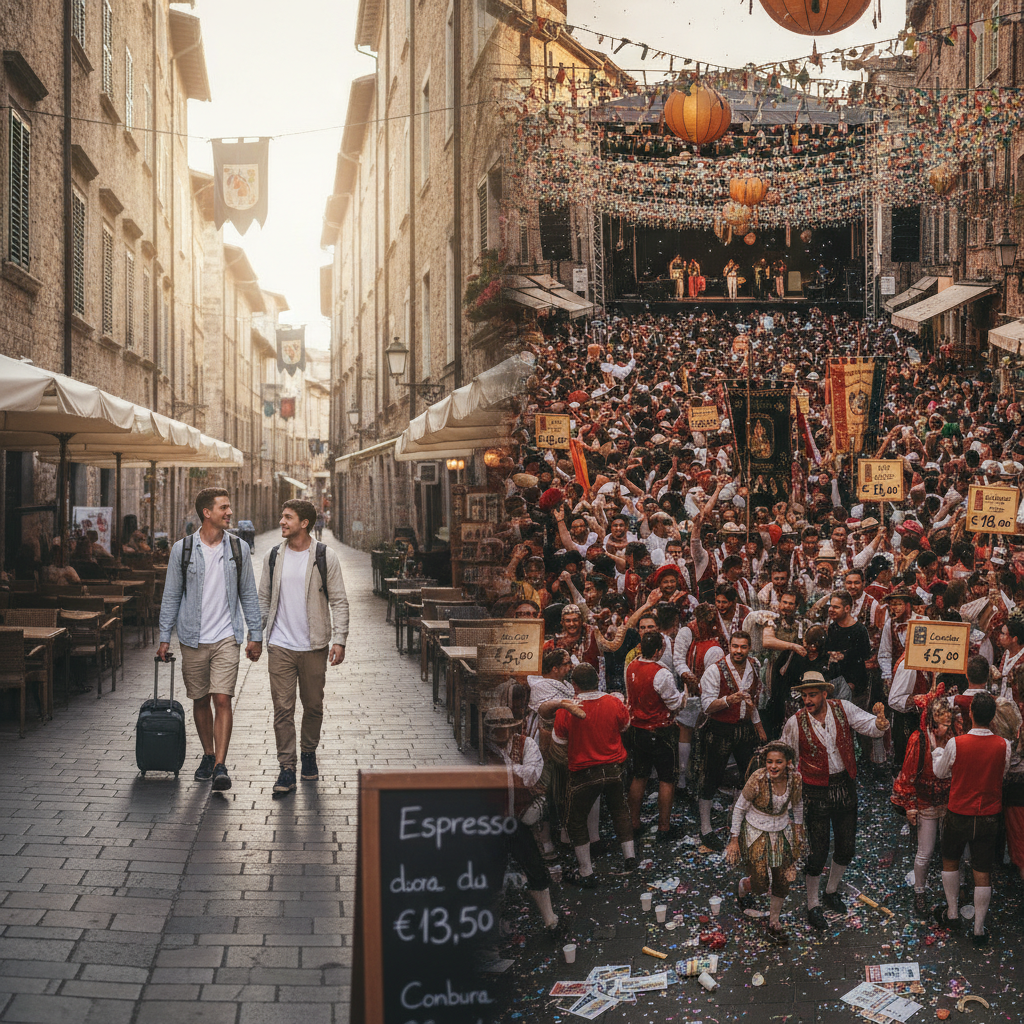
Timing is one of the most underrated decisions you'll make when planning a trip. Most travelers think about where they're going and how long they'll stay, but fewer think carefully about the specific week they arrive — and that single variable can reshape everything from what you pay to what you actually feel when you're there.
What Does Festival Timing Actually Do to Prices?
When a major local festival hits a city — whether it's Carnival in Rio, the Feria de Abril in Seville, or Mardi Gras in New Orleans — prices across the board respond almost immediately. Hotels routinely charge two to four times their standard rates during peak festival dates, and that surge often creeps backward into the days just before the event begins. Arriving one full week ahead of the opening weekend, however, puts you in a window where most accommodation platforms like **Booking.com** or **Airbnb** still show closer-to-normal pricing. You can book a well-located apartment or a comfortable mid-range hotel at rates that would disappear entirely once the festival calendar goes live.
Flights behave similarly. Airlines track destination demand closely, and routes into festival cities spike sharply in the two or three weeks surrounding a headline event. Flying in seven to ten days early often means paying meaningfully less for the same seat, especially if you're booking through a flexible-search tool like **Google Flights**, which lets you scan a date grid and spot the price valleys.
How Does the Pre-Festival City Feel Different?
Arriving a week early gives you something that attending the festival itself simply can't: the city before it becomes a stage. Restaurants are less crowded, and menus aren't inflated by tourist-season pricing. Local neighborhoods feel more like themselves — the rhythm is slower, the streets aren't cordoned off, and people aren't performing for an audience of visitors. If you've ever wanted to understand a place rather than just photograph it, the pre-festival window is genuinely one of the best entry points.
You'll also notice that service quality tends to be higher. Shorter queues at museums, easier reservations at popular dining spots, and locals who aren't already exhausted from weeks of high-season crowds all combine to make the experience feel more personal. It's the difference between reading a book in a quiet room and trying to read it at a concert.
What Do You Actually Miss by Skipping the Festival?
It's worth being honest here: festivals exist because they're worth attending. The atmosphere during something like the Edinburgh Festival Fringe or Valencia's Las Fallas is genuinely unlike anything you can replicate by timing your visit differently. Street performances, communal energy, spontaneous moments with strangers, and the visual spectacle of a city in full celebratory mode — those things don't happen in the week before. You're trading a curated, electric experience for something quieter and more authentic, and that trade has real costs depending on why you're traveling.
If your goal is immersion in a specific cultural event, going early doesn't replace attending it. But if your goal is to understand a city, eat well, move freely, and spend less — the pre-festival week delivers something the festival itself rarely can.
How Should You Plan the Overlap Strategy?
One approach that balances both experiences is to arrive five to seven days before the festival begins, explore the city at its most relaxed, and then stay through the opening two or three days of the event itself. This way you benefit from lower mid-week accommodation rates while still catching the early festival energy before prices and crowds peak. The opening days of most major festivals carry nearly as much excitement as the midpoint, and accommodations haven't yet hit their ceiling.
Using a trip-planning tool like **TripIt** to map your itinerary across this split structure helps you stay organized without over-scheduling. Build in flexibility — the pre-festival week is exactly when you want room to follow a recommendation from a local or linger somewhere longer than planned.
Where Does the Real Savings Add Up?
Beyond flights and hotels, the budget difference across a week of pre-festival travel versus peak-festival attendance shows up in smaller, cumulative ways. Restaurant meals cost less, museum entry is sometimes discounted outside of event dates, and you're far less likely to get upsold on packaged tour experiences that inflate in price once foot traffic surges. Transportation within the city is also less chaotic — ride-share surge pricing drops, public transit is predictably timed, and you're not competing with festival shuttle routes that can double your commute time.
Travelers who track their daily spend carefully often find that the pre-festival week is one of the most cost-efficient windows of any trip, delivering genuine value without requiring extreme budget discipline. You're not sacrificing experiences — you're choosing different ones, and often getting more of them per dollar spent.
What Should You Watch For as This Travel Pattern Grows?
As more travelers catch on to the pre-festival timing strategy, destination cities are beginning to respond. Some local governments and tourism boards have started scheduling smaller lead-up events in the week before major festivals to extend the peak season and capture early arrivals. That's not necessarily a bad thing — it means there may be more to experience in the days before the main event — but it does mean prices in that pre-festival window could gradually creep upward in high-demand destinations. Booking earlier than you might expect, and keeping a close eye on how platforms like **Airbnb** price the shoulder days around major events, will matter more as this window becomes more widely recognized. The travelers who move earliest will continue to find the best combination of cost, access, and experience.