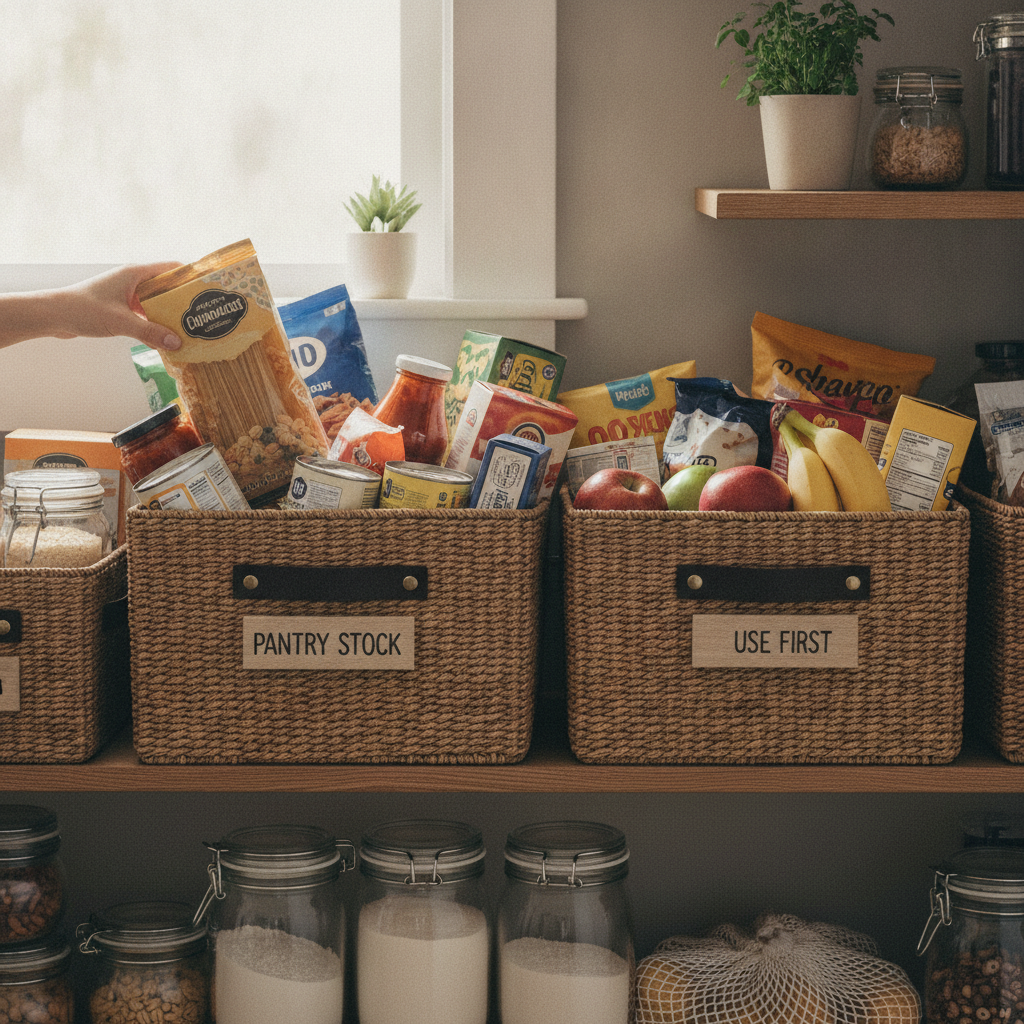
Pantry clutter has a way of quietly draining your grocery budget. You reach past three half-empty pasta boxes, grab what you need, and forget the rest until the expiration date makes the decision for you. It's one of those small, recurring losses that adds up fast — and most households don't realize it's happening until they do a full pantry cleanout and find enough duplicate cans to stock a small shelter.
The two-bin pantry system is a practical, low-effort method borrowed from commercial inventory management. It keeps your stock visible, your purchases intentional, and your waste dramatically lower. Setting it up takes an afternoon. Maintaining it takes almost no effort at all.
Clear Everything Out Before You Set Anything Up
The two-bin system only works if it starts with a clean slate. Pull every item out of your pantry and group things by category — canned goods, dry goods, baking supplies, condiments, snacks. As you sort, toss anything expired and consolidate duplicates into single containers. This step tends to be the most eye-opening part of the process. Most households uncover multiples of the same item bought weeks apart simply because the original was buried. Take stock of what you actually have before buying a single container or label.
Understand the Core Logic of Two-Bin Thinking
The two-bin system divides your pantry stock into two distinct zones: active and reserve. The active bin or section holds whatever you're currently using — the open bag of rice, the partially used can of tomatoes, the half-finished box of oats. The reserve holds sealed backups. When the active supply runs out, you pull from reserve and immediately add that item to your shopping list. You never shop blind, and you never buy a third jar of something when two are already sitting unopened.
Use Containers That Make Stock Levels Visible at a Glance
Opaque packaging is one of the biggest contributors to pantry waste. When you can't see how much is left, you guess — and guessing leads to over-buying. Clear containers from brands like OXO, Rubbermaid Brilliance, or IKEA's 365+ line make stock levels immediately obvious. Fill the active container, leave the sealed backup in reserve, and you'll never need to dig through a shelf to figure out whether you need more. Visibility is the entire operational principle behind why this system works consistently.
Label Both Bins Clearly and Consistently
Labeling isn't just for aesthetics. A clear label on each bin tells every member of the household exactly what belongs where and what the reorder trigger is. Use a label maker or even masking tape with a marker — the format matters less than the consistency. Include the item name, the maximum quantity you keep in reserve, and where it goes on your shopping list when it's pulled. Families who use apps like AnyList or OurGroceries can link the label system directly to a shared shopping list so restocking happens automatically.
Set a Fixed Reserve Quantity for Every Category
One of the most useful decisions you'll make is setting a firm ceiling on how much reserve stock you allow per item. For everyday staples — canned beans, pasta, tinned tomatoes — one backup unit is usually sufficient. For slower-moving items like specialty spices or baking powder, half a unit or simply a noted reorder point works better. Without a ceiling, the reserve bin becomes a dumping ground, and you're back to the same overcrowded shelves you started with. Discipline around quantity is what separates a working system from a well-intentioned one.
Run a Weekly Pantry Check Alongside Your Meal Planning
The system pays its biggest dividends when you pair it with your weekly meal planning habit — or build one if you don't already have it. Before writing your grocery list, spend five minutes scanning both bins. Note what's been pulled from reserve into active, what's nearly empty, and what's still fully stocked. This check takes very little time once the system is established, and it means your grocery list reflects reality rather than habit. You stop buying what you assume you need and start buying only what the system confirms is missing.
Rotate Stock Every Time You Restock
This is the step most people skip, and it's the one that causes the most waste over time. When you add a new reserve unit, move the older stock to the front or top so it gets used first. The principle is identical to what grocery stores do: first in, first out. Brands like Camwear make rotating shelf inserts that automate this in deeper pantries, but even manually shifting items forward takes seconds. Skipping rotation is how you end up with perfectly good food expiring quietly at the back of a shelf.
Reassess the System Every Season
Household eating patterns shift throughout the year. Your soup consumption in winter bears little resemblance to what you reach for in July. Every three months or so, do a brief audit of which bins are consistently going untouched and which are running through reserve faster than expected. Adjust your reserve quantities accordingly. A two-bin system that reflects how your household actually eats is far more effective than one built around a theoretical grocery list. Small seasonal tweaks keep it accurate and prevent stock from sitting unused long enough to expire.
Getting started is genuinely the hardest part. Once the bins are in place, labeled, and stocked, the system largely runs itself. Your grocery trips become faster, your waste drops noticeably, and the quiet frustration of duplicate purchases fades. It's one of those home organization changes that earns back far more time and money than it costs to set up — and that's exactly the kind of practical win worth making.