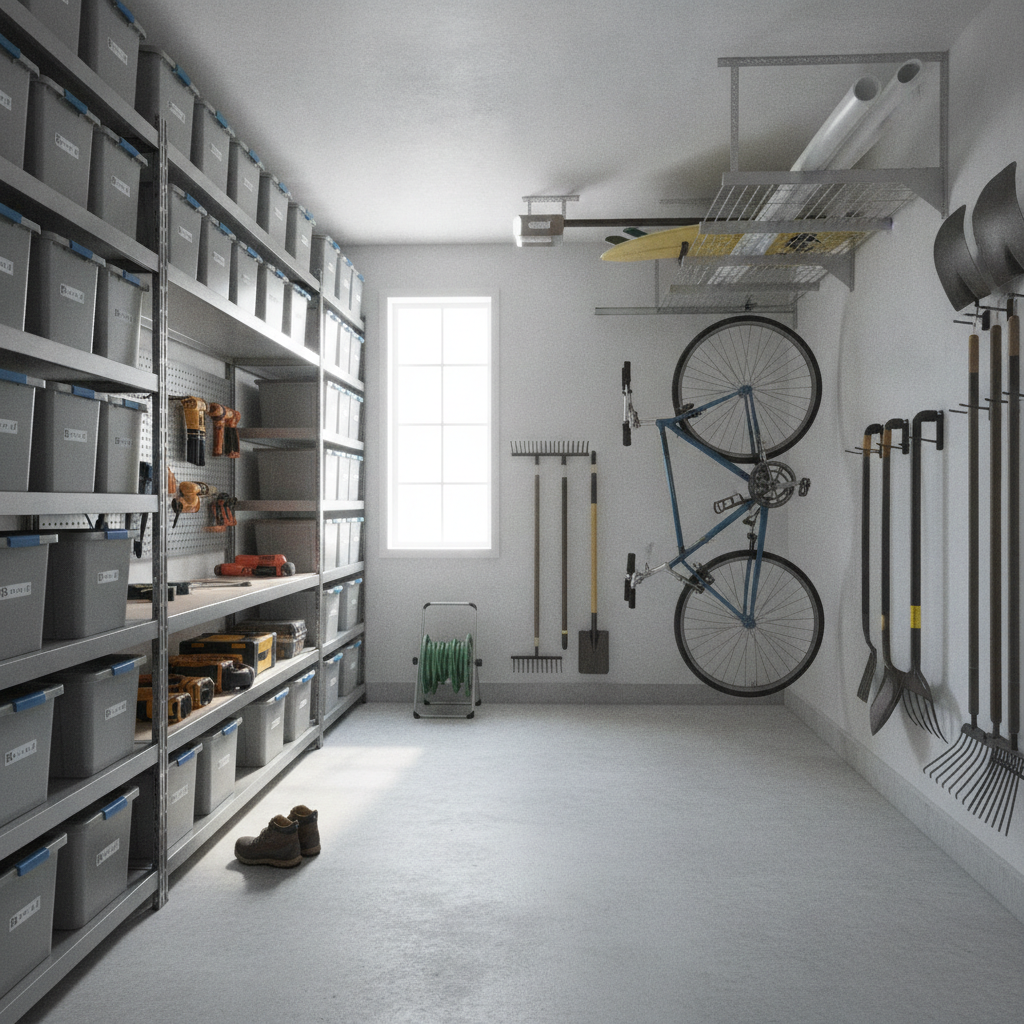
Most garages slowly become unusable — not because they run out of space, but because that space gets used in the least efficient way possible. Boxes stack against walls, bikes lean at odd angles, and seasonal gear claims square footage that a car or workshop table should be using. The floor fills up while eight feet of wall above it sits completely empty. That's the core problem, and it's one you can solve without tearing out drywall or hiring a contractor.
Vertical storage is one of the most cost-effective organizational strategies available for garages. It treats the wall as a resource, not just a backdrop. The approaches below work whether your garage is a single-car detached unit or a two-bay attached space, and most of them can be completed over a weekend.
Map Your Zones Before Buying Anything
Before purchasing a single bracket or bin, spend time identifying how different sections of your garage actually get used. A zone near the entry door should hold items you grab frequently — sports equipment, dog leashes, reusable shopping bags. A zone near the back wall works better for seasonal storage that you access a few times per year. Sketching this out on paper takes maybe twenty minutes and prevents the common mistake of buying storage systems that end up holding the wrong things in the wrong places. Think of it as a layout strategy rather than a shopping trip.
Install a Wall-Mounted Track System as Your Foundation
Track systems like those from Gladiator Garageworks or Rubbermaid FastTrack are the workhorse of vertical garage organization. You attach horizontal rails to wall studs, then hang interchangeable hooks, baskets, and shelving directly onto the tracks. The main advantage is flexibility — if your storage needs shift, you can reposition components without new hardware or wall damage. One eight-foot panel can hold bikes, hand tools, extension cords, and garden gloves simultaneously. Installing two or three panels across a back wall dramatically transforms how much floor space becomes available.
Use the Wall Above Cabinets for Long-Term Storage
If your garage already has base cabinets or a workbench, the wall space above it is often underused. That upper zone — roughly between five and eight feet high — is ideal for items you need occasionally but not daily. Sturdy wall-mounted shelving in this range works well for paint cans, camping gear, spare parts, and seasonal decorations. Brands like Edsal and Muscle Rack offer heavy-duty steel shelf units that bolt directly to studs and support serious weight. Storing heavy or bulky items at this height keeps them off the floor and out of the way without making them genuinely hard to access.
Hang Bikes Vertically to Free Up Significant Floor Space
A single bike stored horizontally takes up roughly fifteen to twenty square feet of floor space once you account for the footprint and the buffer zone around it. Hung vertically from a wall-mounted hook through the front wheel, that same bike occupies almost no floor space at all. Ceiling-mounted pulley systems, like the ones sold by Rad Sportz, let you hoist bikes overhead entirely — ideal for a family with multiple bikes. Even a simple hook drilled into a stud costs only a few dollars and reclaims space immediately. This single change can transform a crowded single-car garage into one with room for an actual vehicle.
Create a Dedicated Overhead Zone for Bulky Seasonal Items
The ceiling is the most underused surface in nearly every garage. Ceiling-mounted storage platforms — essentially flat-panel shelving suspended by vertical drop rods — are designed specifically for bulky items like holiday tubs, camping chairs, and luggage that only come down two or three times per year. Systems from Fleximounts or Monkey Bars install in a few hours and can support several hundred pounds when properly anchored to ceiling joists. You're essentially adding an additional storage room above your head without touching the walls or floor at all. Keep a step ladder nearby and label bins clearly.
Build a Pegboard Wall for Small Tools and Hardware
Pegboard is one of the oldest vertical storage tools for a reason — it's cheap, adaptable, and immediately effective. A four-by-eight sheet installed over a workbench area can hold dozens of hand tools, cords, spray cans, and small hardware bins in a format where everything is visible and accessible. The key is using quality hooks and keeping the layout intentional rather than random. Outline tool shapes with a marker so you always know where things belong and can spot what's missing at a glance. Pegboard works especially well paired with a lower track system, giving you dedicated zones for small items and large ones.
Add a Slatwall Panel for Versatile, Adjustable Storage
Slatwall panels — the grooved wall panels common in retail stores — offer more holding capacity than pegboard and handle heavier accessories. They're available in composite or PVC versions and can be painted to match your garage interior. Unlike pegboard, slatwall supports bins, shelves, and hooks rated for heavier items like power tools, helmets, and bulkier garden supplies. Installing a slatwall section on one side wall while using track systems on the back creates a layered vertical storage strategy that keeps virtually every category of item off the floor. It's a practical option for garages that double as workshops.
Label and Maintain Zones So the System Actually Sticks
Storage systems fail not because they were poorly installed but because the organization logic fades after a few months. Labeling shelves, bins, and zones takes ten minutes and makes it significantly easier for everyone in the household to put things back correctly. Use a label maker or even adhesive tape with a marker — the method matters less than the consistency. Doing a quick zone reset twice a year, perhaps when you switch seasonal gear, keeps the system functional long-term. The goal isn't perfection; it's a garage that remains workable without requiring a full reorganization every spring.
A cluttered garage rarely becomes organized all at once. The most effective approach is to pick one wall, install one system, and let that small win motivate the next step. Vertical storage doesn't require major investment or professional help — it just requires treating empty wall space as the resource it already is. Start this weekend with a track panel or a few ceiling hooks, and you'll be surprised how quickly the floor starts to clear.