There is a particular kind of exhaustion that sets in around day three of a trip when you realize you've been paying convenience prices for everything — the coffee across from the famous monument, the lunch spot with the laminated menu in four languages, the bottle of water from the cart near the entrance of every attraction. It adds up quietly, and by the time it registers, the pattern is already set. The decision about where to sleep doesn't just determine where you rest at night; it shapes almost every financial choice that follows from the moment you step outside.
The Economics of Where You Wake Up
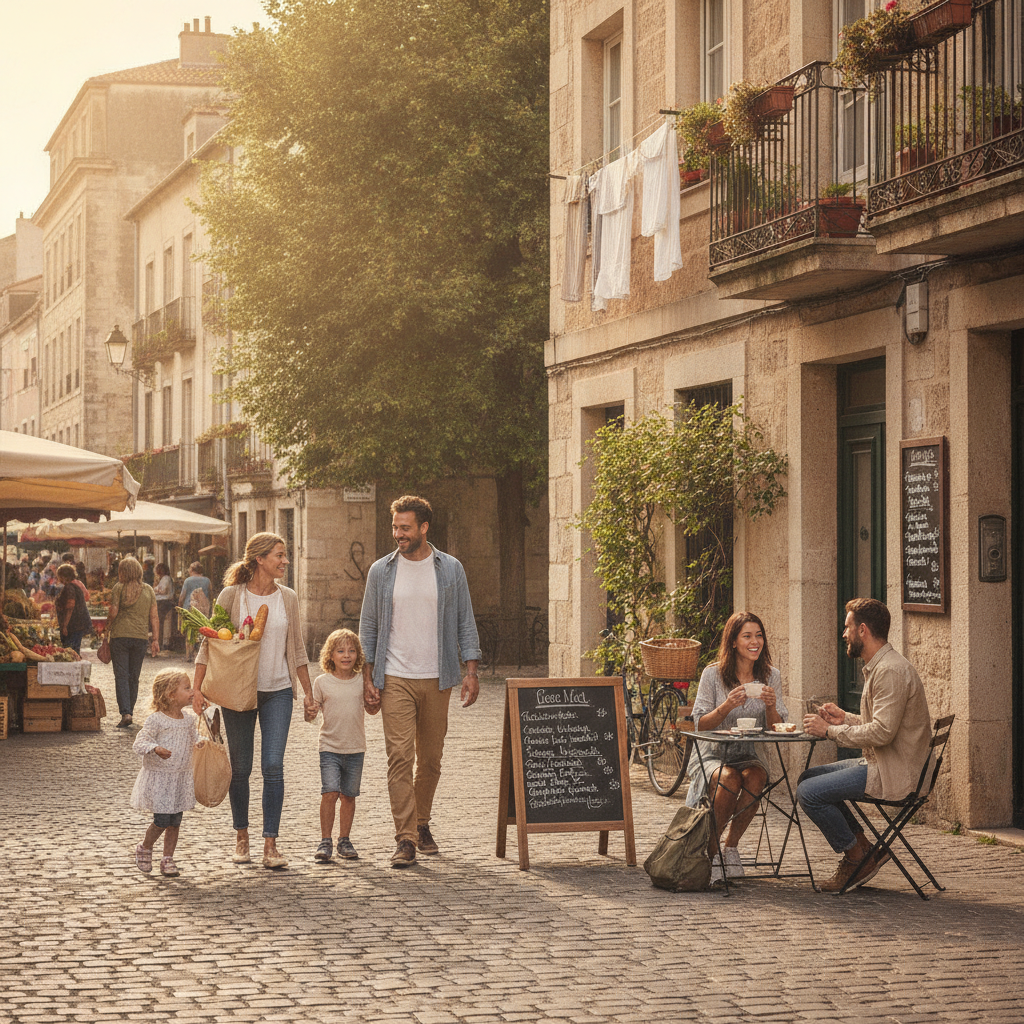
Staying in a residential neighborhood — a place like Pigneto in Rome, Gràcia in Barcelona, or Friedrichshain in Berlin — changes the starting conditions of every day. When the streets outside are designed for people who actually live there rather than people passing through on a schedule, the commercial ecosystem reflects that. Bakeries compete on quality because their customers return daily. Grocers price produce for locals on a budget. Cafés charge what the neighborhood bears, not what a tourist in a rush will pay. This isn't a secret or a trick — it's simply the ordinary result of supply meeting demand in a place where the demand is long-term and price-sensitive. The traveler who books a room in such a neighborhood inherits those conditions.
The contrast becomes especially visible at meal times. In heavily touristed zones, restaurants cluster where foot traffic is highest, and high rent gets passed directly into menu prices. A sit-down lunch in a tourist district can cost two to three times what the same meal — sometimes literally the same dish — costs four streets away in a residential quarter. The tourist district restaurant also tends to price defensively, knowing its customers are unlikely to return. Neighborhood restaurants depend on repeat business and local word of mouth, which creates a natural incentive toward fair pricing and quality.
Movement Patterns and What They Actually Cost
Where a traveler is based doesn't just affect prices — it affects how much movement costs. A hotel in the center of a tourist district seems efficient on a map, but the paradox is that when everything nearby is packaged for visitors, people tend to travel farther to find something authentic, different, or affordable. That means more transit rides, more taxis, and more time spent moving between zones rather than being present in them. A base in a residential neighborhood inverts this. The interesting, local, affordable version of daily life is directly outside. The tourist sites are a deliberate trip away, which tends to mean fewer, more intentional visits rather than an unplanned drift through expensive areas.
Apps like Citymapper and Google Maps have made it straightforward to model what a day of movement from any given base actually costs in transit time and fare. Travelers who run this calculation before booking often find that a neighborhood apartment a few metro stops from the main sights costs less per day in accommodation and meaningfully less per day in ground transport — especially in cities where tourist-zone hotels charge premium rates precisely because of their proximity to landmarks.
The Supermarket Question
One of the clearest financial signals that a base is working well is whether there's a real supermarket within walking distance — not a convenience shop with tourist-hour markup, but a full grocery store where locals do their weekly shopping. In practice, this simple variable can shift food costs dramatically over the course of a week-long trip. A traveler with access to a neighborhood Lidl, Mercadona, or Carrefour Express can cover breakfast, picnic lunches, and evening snacks at a fraction of what comparable items cost at hotel minibar prices or tourist-district delis. The cultural experience of navigating a local supermarket — its brands, its regional products, its pricing logic — also turns out to be one of the more genuinely interesting windows into how people in a place actually live.
This doesn't require cooking full meals or sacrificing the pleasure of eating out. It means being selective: using the apartment kitchen or hotel breakfast alternative for simple meals and reserving restaurant spending for dinners that are actually worth it. That kind of intentional spending tends to produce better meals at better value than grazing through whatever is convenient near a cathedral.
How the Feel of a Trip Shifts
Beyond the numbers, there is something harder to quantify about what a residential neighborhood base does to the texture of a trip. The morning routine becomes something closer to normal life — a walk past a pharmacy, a nod to the same café owner, a sense of having a small corner of a city that belongs to the visit rather than to everyone visiting. This is what travelers are often trying to describe when they say they want to experience a place like a local, though the phrase has become worn from overuse. What they mean, practically, is that they want to feel embedded rather than processed.
That feeling has a financial dimension too. When you're embedded, you stop making defensive purchases — the overpriced umbrella near the tourist site when it rains, the mediocre sandwich near the museum because there's nothing else visible. You already know the pharmacy, the café, the small trattoria where the fixed lunch is reasonable and good. That knowledge, built over even two or three days in the same neighborhood, quietly closes off a dozen small spending leaks that tourist-district stays leave wide open.
The traveler who books a walking-distance neighborhood as a base often returns home having spent less overall, eaten better, seen roughly the same sights, and carried back a more complete sense of the place — which is, in the end, the thing the trip was supposed to deliver. The opening exhaustion of the tourist district, that particular drain of paying premium for everything within reach, turns out to be entirely optional. It just requires making the choice before arrival rather than noticing the cost once it's already been paid.