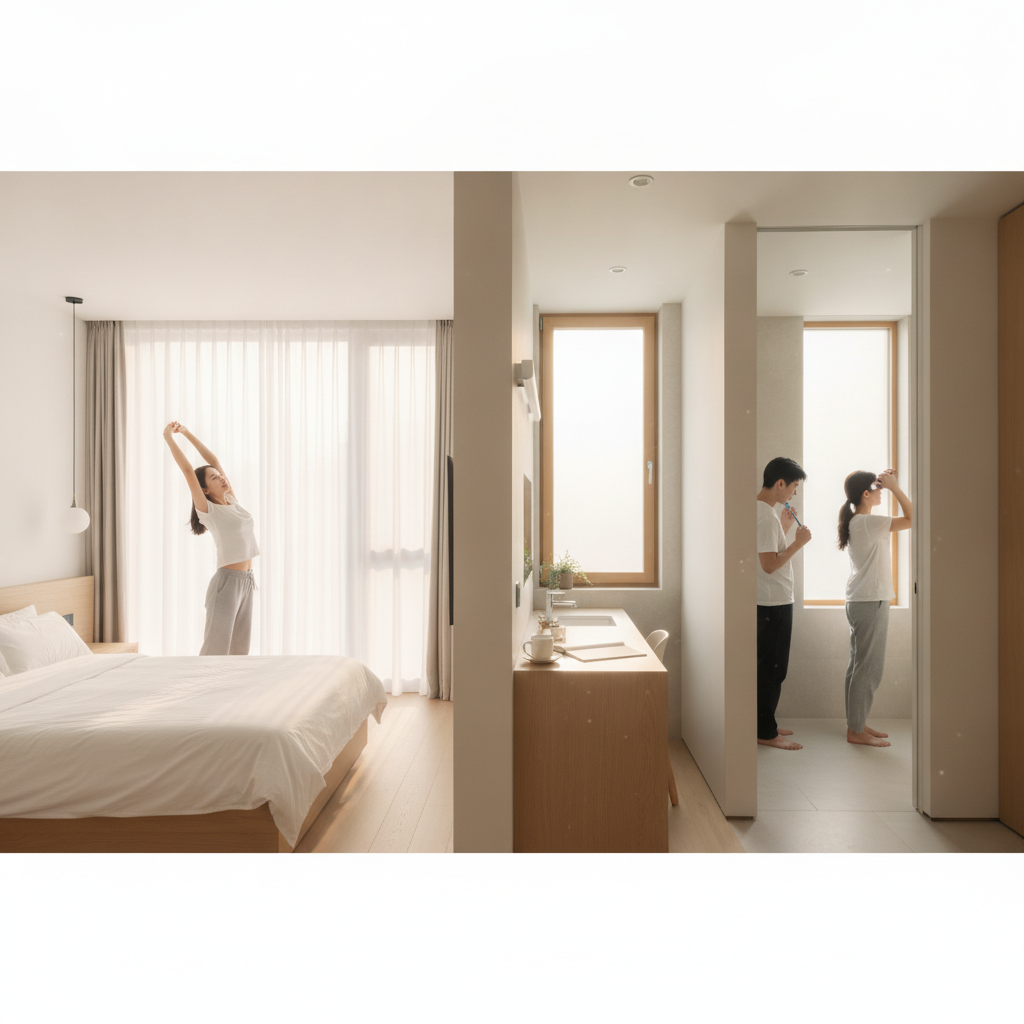
Light is one of the most underused organizational tools in any home. Most people design their mornings around clocks and phone alarms, but the natural light moving through your windows can do a surprisingly reliable job of guiding your schedule — often more gently and effectively than any timer. Once you start paying attention to where sunlight lands in your home and when, you can sequence your morning tasks in a way that feels less forced and more intuitive.
If your mornings feel chaotic or rushed despite your best efforts, it's worth considering whether your routine is actually working with your home's light patterns — or fighting against them.
Map Where the Light Lands First
Before you can use window placement to your advantage, spend a few mornings just observing. Notice which rooms receive early light, which stay dim until mid-morning, and which spaces brighten gradually versus all at once. East-facing windows in kitchens or bedrooms are particularly useful as natural wake-up cues, since they catch the earliest rays. Apps like Sun Surveyor can help you track solar angles if you want to be more precise. Once you know your home's light map, you have a reliable, repeatable structure to build a routine around.
Start Your Day in the Brightest Room First
If your kitchen or living area faces east, that's where your morning should begin. Exposure to bright natural light within the first thirty minutes of waking helps regulate your body's internal clock, which makes alertness come more naturally. Rather than fighting your way to a coffee machine in a dim hallway, position your first task — whether that's breakfast, medication, or journaling — in whatever space gets the morning sun. This isn't just pleasant; it actively signals to your body that the day has started and reduces the groggy delay many people experience.
Use Dimmer Rooms for Slow-Start Tasks
Not every morning task needs bright light. North-facing rooms or interior spaces that stay shadowy until later in the morning are actually ideal for tasks that require less mental activation — gentle stretching, listening to a podcast, reviewing a to-do list, or folding laundry. These tasks don't compete with your light-dependent energy peak, so saving them for naturally dim spaces makes practical sense. It also means you're not wasting prime, sun-lit morning hours on low-focus activities that could happen anywhere.
Let Window Brightness Signal Transition Points
Instead of checking your phone every few minutes, let shifting light act as a transition cue between routine stages. When a certain room brightens noticeably, that's your signal to move to the next task. In homes with south-facing windows, for example, the light in a hallway or dining area tends to peak at a fairly consistent time each morning. Over a week or two of observation, you'll notice these patterns are surprisingly reliable. Removing your reliance on phone notifications also reduces the temptation to scroll, which is one of the most common ways mornings derail.
Position Your Getting-Ready Space Near Natural Light
Bathrooms without windows, or with frosted glass that blocks direct light, often make getting ready slower and more error-prone — foundation shades look different, grooming details get missed, and the overall experience feels more effortful. If your bathroom has a window, try rearranging your routine so that tasks requiring visual accuracy happen near it. If your bathroom lacks natural light entirely, consider placing a mirror near a well-lit doorway for precision tasks. Brands like Feit Electric make daylight-balanced bulbs that replicate natural morning light reasonably well as a supplement.
Reserve West-Facing Spaces for Wind-Down Tasks
West-facing rooms are often the darkest in the early morning, which makes them poor choices for high-energy wake-up tasks but surprisingly useful for calmer morning prep. If your home office, laundry room, or a secondary bedroom faces west, those are natural homes for tasks you want to do quietly before the day fully accelerates — packing a bag, choosing an outfit, reviewing your calendar. Sequencing these tasks into naturally dim west-facing spaces keeps your energy where it's most needed during peak light hours.
Use Seasonal Light Shifts to Adjust Your Routine Quarterly
Window placement awareness isn't a set-it-and-forget-it strategy. The angle and timing of sunlight shifts considerably across the year, and what works brilliantly in summer may feel off by autumn. A room that's flooded with light at 6 a.m. in June might not brighten until 8 a.m. in December. Reassessing your routine at the change of each season — a light audit, essentially — keeps your mornings aligned with actual conditions rather than an idealized schedule that worked once and was never updated. A simple notebook or the notes app on your phone is all you need to track observations.
Keep Frequently Used Items Where the Light Is
One practical way to anchor your window-aware routine is to store the items you reach for first exactly where the morning light falls. If your east-facing kitchen windowsill gets good early light, that's where your vitamins, keys, or planner should live. IKEA's KALLAX shelving units or small pegboards near windows work well for this kind of intentional placement. When the things you need most are already in the brightest part of your home at the time you need them, the friction of starting your day drops considerably — and that small reduction in friction compounds across every morning.
Shifting how you think about your morning — from a schedule you follow to a space you move through thoughtfully — is a change that doesn't cost anything and can be started today. Pay attention to the light in your home this week, even casually, and you may find your routine reorganizes itself almost naturally.