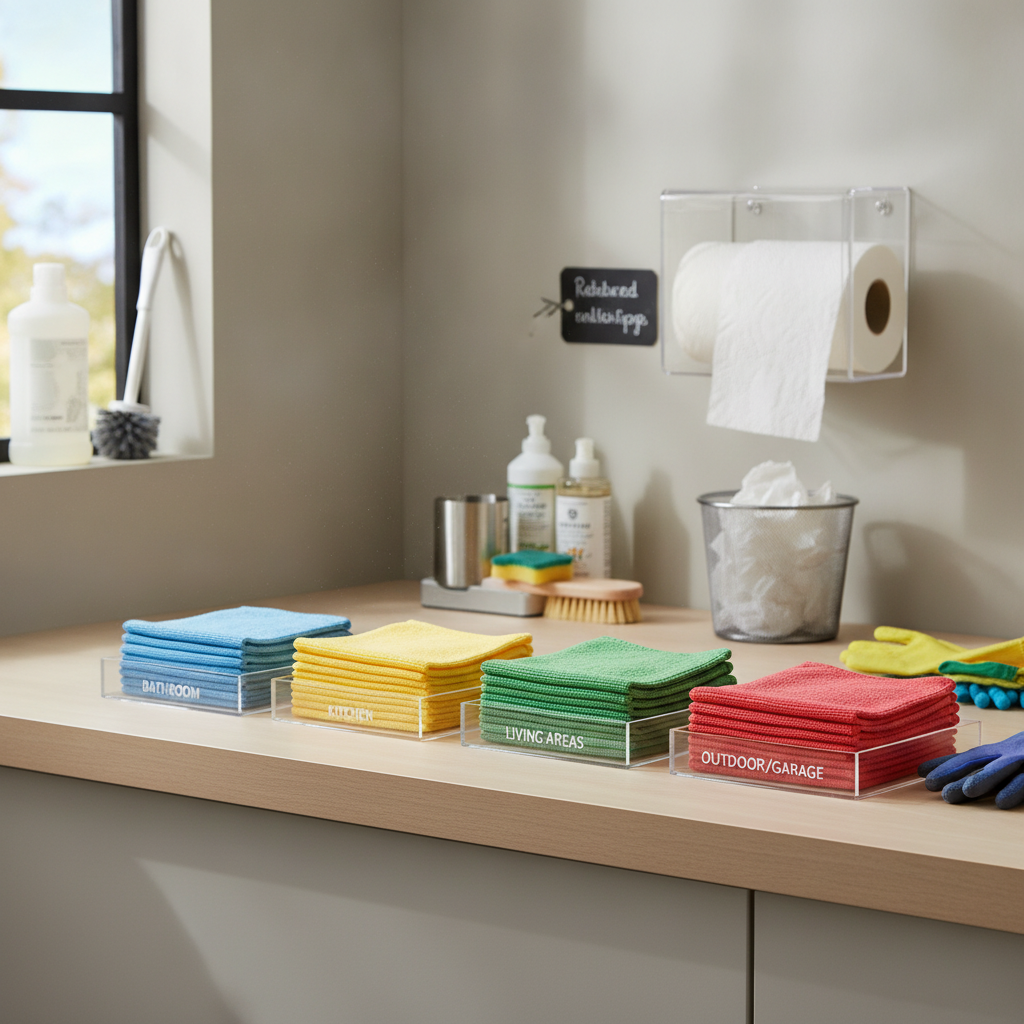
Most households accumulate cleaning cloths the same way they accumulate everything else — one at a time, without a system, until the drawer is full and nobody's quite sure which rag touched what. If your current setup involves grabbing whatever cloth is nearby and hoping for the best, you're not alone, and you're almost certainly spreading more bacteria than you're eliminating.
A zone-based microfiber system changes that entirely. Instead of assigning cloths by task in the moment, you assign them by location permanently — and that one shift quietly improves your hygiene outcomes while cutting what you spend on cleaning supplies over time. Here's how to think through the transition.
What Does a Zone-Based Cleaning System Actually Mean?
A zone-based system simply means dividing your home into distinct cleaning areas — kitchen, bathrooms, living spaces, entryways — and dedicating specific cloths to each one. The cloths never cross zones. A cloth that wipes down your bathroom sink doesn't touch your kitchen counter, ever. This sounds obvious once you hear it, but most households don't practice it in any structured way. Brands like e-cloth and Norwex have built entire product lines around this principle, color-coding their microfiber cloths specifically so users can maintain zones without guessing. The color system is the key operational detail that makes the whole approach stick.
How Does Cross-Contamination Actually Happen With Standard Cloths?
When you use a single cloth across multiple surfaces or rooms, you're essentially transporting whatever is on one surface to the next. Bathroom pathogens — particularly those found near toilets and drains — are among the most persistent in a household environment. A cloth used to wipe a toilet seat exterior and then rinsed and reused on a kitchen faucet is a contamination vehicle, even if it looks clean. Microfiber is particularly effective at trapping and holding particles rather than just pushing them around, which is one of the reasons it outperforms cotton terry in cleaning tests. But that same trapping ability means a contaminated microfiber cloth carries more than a cotton rag would. A zone system prevents the problem at the source rather than relying on perfect washing habits between every use.
Why Does Color-Coding Make the System Work in Real Life?
The practical barrier to zone-based cleaning is memory. Without a visual cue, it's easy to grab the wrong cloth in a hurry, especially in a shared household. Color-coding eliminates that decision entirely. Assign red cloths to bathrooms, blue to kitchens, green to general living spaces, and yellow to entryways or utility areas — a framework used by commercial cleaning operations for decades. Products from companies like Vileda and Microfiber Wholesale come in multi-color packs designed exactly for this purpose. Once the colors are established, the system runs on autopilot. You don't have to remember anything; you just reach for the right color.
How Does This Approach Cut Your Supply Costs Over Time?
Single-use paper towels and disposable wipes are convenient, but the cost compounds quickly across a year of regular cleaning. A household that relies heavily on disposable products can spend considerably more annually than one using a well-maintained microfiber set. Quality microfiber cloths from brands like AmazonBasics or MR.SIGA typically last through hundreds of washes when cared for properly — that's years of use from a one-time purchase. When you add a zone system, you also stop over-purchasing because you know exactly how many cloths each area needs. You're no longer buying replacements reactively; you're working from a defined inventory.
What's the Right Way to Wash and Maintain Zone Cloths?
Microfiber loses effectiveness when washed with fabric softener or dried at high heat, two of the most common laundry mistakes. Softener coats the fibers and reduces their ability to trap particles, which defeats the entire purpose. Wash zone cloths in warm water with a small amount of plain detergent, and either air dry them or use a low heat setting. Keeping bathroom cloths in a separate laundry bag — something as simple as a mesh lingerie bag — makes sure they don't get mixed into the general wash with kitchen cloths. That separation during laundering reinforces the zone logic and keeps the system clean from start to finish.
How Many Cloths Does Each Zone Actually Need?
Over-complicating the inventory is one of the fastest ways to abandon a system. A practical starting point is two to three cloths per zone — one in active use, one drying or in the laundry, and one spare. For a standard home with a kitchen, two bathrooms, and a general living area, that means somewhere between eight and twelve cloths total. That's a modest upfront purchase that replaces ongoing disposable spending almost immediately. Reassess after a month of use; some zones may need an extra cloth while others rarely cycle through more than one.
How Do You Get Everyone in the Household to Use the System?
The most technically sound system fails if other people in your home ignore it. Keep the setup visible and intuitive rather than hidden in a drawer with no context. A small labeled hook or basket in each zone — one for clean cloths, one for used ones — makes the right behavior the path of least resistance. A quick walkthrough explaining the color logic is usually enough; most people find the system easier to follow than the ambiguous cloth drawer they've been rummaging through. Shared households benefit most from a visible system precisely because ambiguity is where contamination creeps in.
What Should You Do With Cloths That Reach the End of Their Life?
Microfiber doesn't last forever. When cloths start to feel less grippy, leave streaks on smooth surfaces, or develop persistent odors that washing doesn't resolve, they've reached the end of their useful cleaning life. Rather than throwing them directly in the bin, worn kitchen or living-area cloths can be repurposed as workshop rags or used for polishing outdoor furniture. Bathroom cloths that are past their prime should be retired entirely rather than reassigned to another cleaning role. Building a simple replacement rhythm — evaluating your cloth inventory every six months — keeps the system performing well without requiring constant attention.
Switching from a grab-whatever approach to a color-coded, zone-based microfiber system is one of those home organizational changes that pays off faster than expected and requires surprisingly little ongoing effort to maintain. You reduce the risk of spreading bacteria between rooms, spend less on disposables over time, and bring a level of intentionality to routine cleaning that makes the whole task faster and more effective. The system doesn't demand perfection — it just replaces guesswork with a structure that works automatically once it's in place.