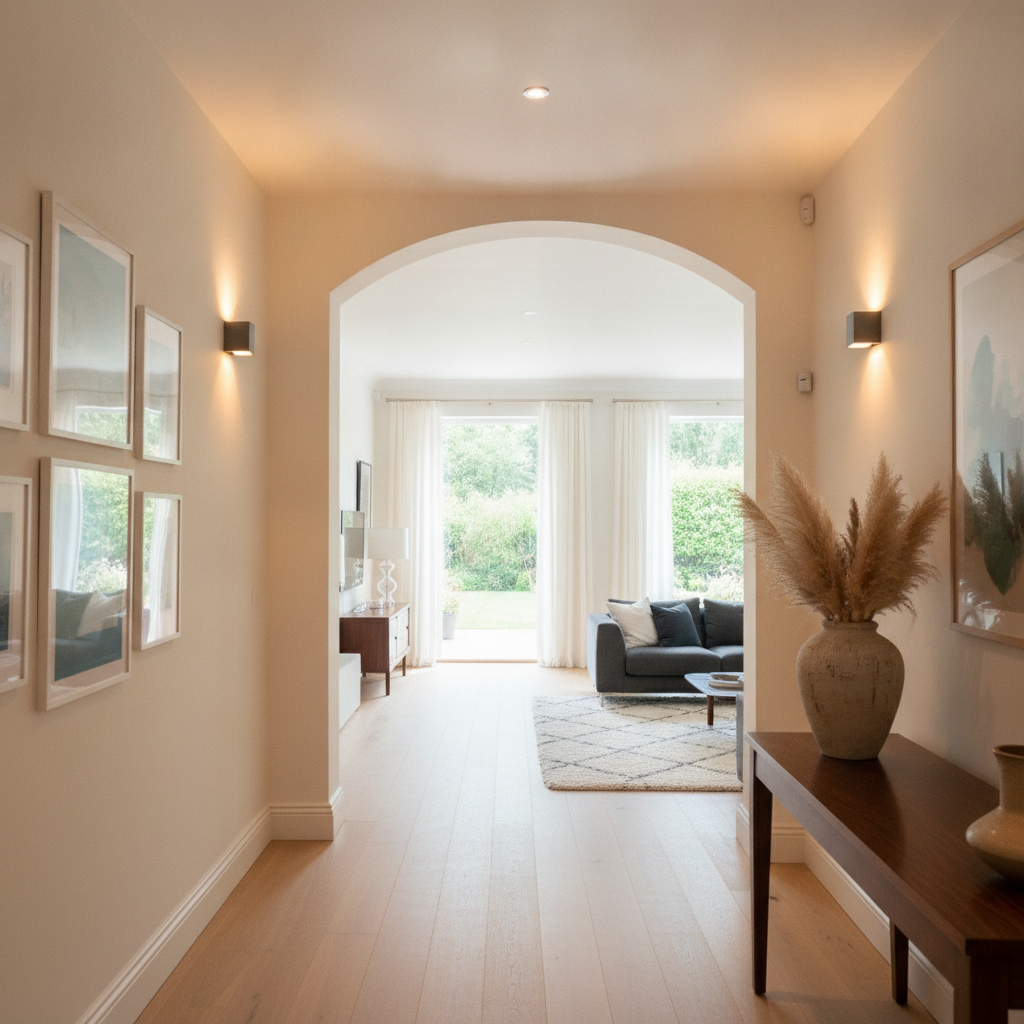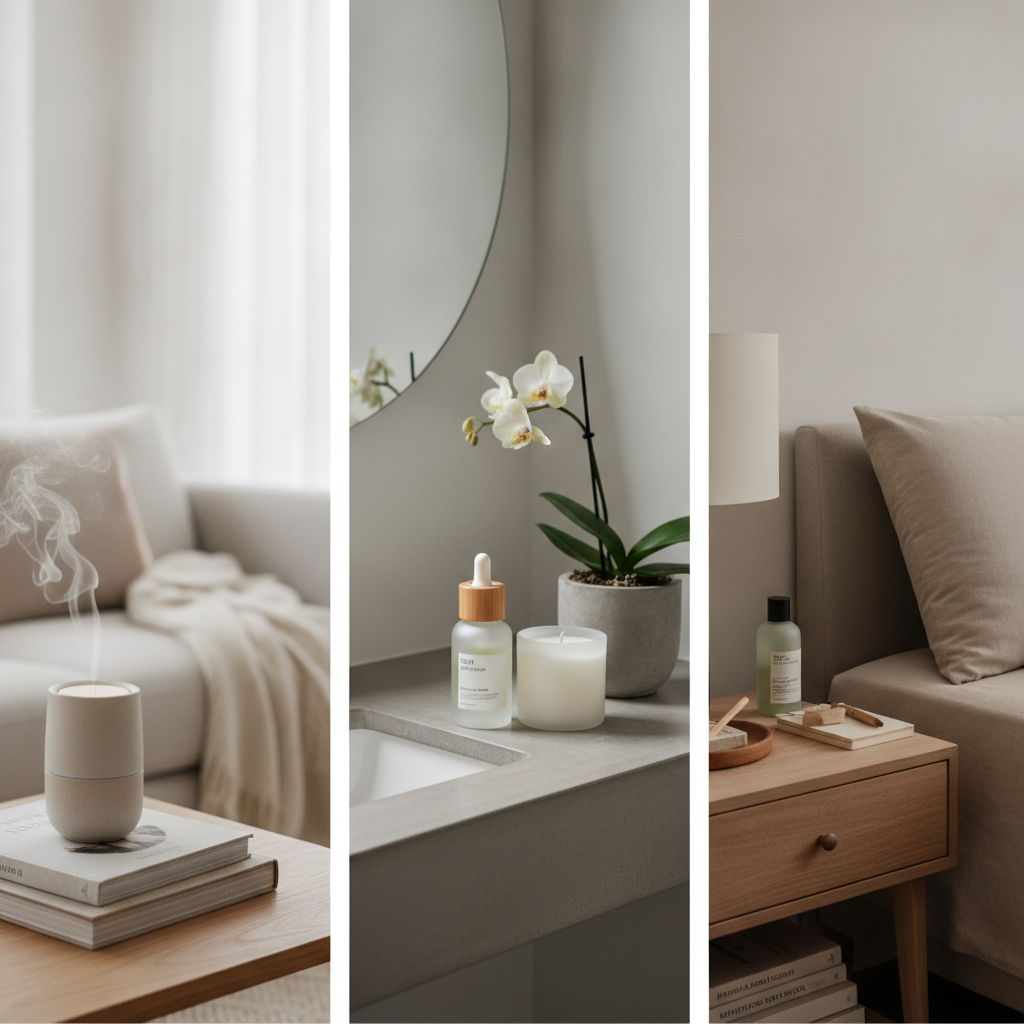
There is a moment, familiar to anyone who has walked into a well-kept home, where something registers before the eyes have fully adjusted — a quality of air, a warmth or coolness that feels deliberate. This is rarely accidental. The homes that feel most considered, most alive with personality, are often those where scent has been treated as a design element rather than an afterthought. Scent zoning, the practice of assigning distinct fragrance identities to different rooms, is one of the quieter revolutions in interior living, borrowing from hospitality design and finding its way into thoughtful households everywhere.
The Philosophy Behind Intentional Fragrance
Scent operates differently from every other design element because it bypasses conscious evaluation entirely. Color can be assessed, furniture critiqued, but fragrance goes directly to memory and mood before the analytical mind has a chance to intervene. This is why hotels like the Four Seasons and Ritz-Carlton have long employed signature scenting strategies — not merely to smell pleasant, but to create a coherent emotional environment. Scent zoning applies this same philosophy at the domestic scale, treating each room as a distinct sensory zone with its own character, function, and atmospheric intention.
Mapping a Home's Fragrance Identity
The foundation of scent zoning is understanding how each room is actually used, not just what it contains. A kitchen is a place of transformation and activity; a bedroom is a sanctuary of rest; a study demands focus and quiet concentration. Each function suggests a corresponding fragrance family. Kitchens typically benefit from clean, citrus-forward or herbal notes — lemon verbena and eucalyptus work well here — while bedrooms respond to softer, warmer profiles like sandalwood, lavender, or the subtle sweetness of cedarwood. The key principle is contrast: adjacent rooms should feel distinct enough that moving between them registers as a gentle atmospheric shift.
Fragrance Families and Their Functional Roles
Perfumers and aromatherapists organize scents into broad families — *gourmand* (warm, food-like notes such as vanilla and tonka bean), *aromatic fougère* (fresh herbs and mossy undertones), *chypre* (earthy, woody, slightly resinous), and *aquatic* (clean, mineral, reminiscent of open water). Each family carries a psychological register that maps naturally onto domestic spaces. Aquatic and aromatic notes suit entryways and living rooms, where sociability and openness are the desired mood. Chypre and woody notes anchor private spaces like home offices and libraries. Understanding these categories makes product selection far more intentional than simply choosing what smells appealing in a store.
Choosing Delivery Methods for Each Zone
The method of fragrance delivery shapes not only intensity but character. Reed diffusers from brands like Vitruvi or Maison Margiela's Replica line offer slow, continuous release suited to rooms where constancy matters — a hallway, a bathroom, a reading nook. Candles introduce a ritualistic quality, best reserved for spaces where they'll be actively tended: a dining table, a bedside shelf, a study desk used in evening hours. Electric diffusers allow precise control over intensity and timing, making them practical in larger open-plan spaces. Linen sprays, often overlooked, are remarkably effective in bedrooms and closets, where the scent becomes associated with the physical comfort of fabric itself.
Layering Without Overwhelming
One of the most common mistakes in home fragrance is treating intensity as a virtue. A room that announces its scent from the doorway has crossed into excess. The goal of scent zoning is presence without insistence — a fragrance that reveals itself gradually as one settles into a space. Layering works best when the primary scent source is subtle and the secondary element, perhaps a scented candle or a sachet inside a linen drawer, reinforces rather than competes. Boundaries matter, too: rooms with strong fragrance identities should be separated by unscented transitional spaces — a corridor, a stairwell — to prevent olfactory blending that undermines each zone's integrity.
Cultural Traditions That Inform Modern Practice
Scent zoning is not a new invention. It draws from practices embedded in cultures across centuries. In Japan, *kōdō* — the art of appreciating incense, literally translated as "the way of fragrance" — treats scent as a meditative discipline, assigning specific woods and resins to states of contemplation and ceremony. In the Arab world, *bakhoor* (scented wood chips burned over charcoal) has long been used to honor guests and mark the ritual welcome of domestic space. Moroccan riads traditionally use orange blossom water — *ma' zahar* — to perfume rooms and courtyards. These traditions all share a common understanding: scent is architecture for the invisible, shaping how a space is experienced as surely as light or proportion.
Building Your Own Scent Map
If you're beginning to think about your home's fragrance in these terms, the most useful starting point is simply to walk through each room with fresh attention. Consider what mood the space is meant to support, what time of day it's most used, and whether it needs to feel energizing, calming, or welcoming. Write it down if it helps — a loose map, room by room, noting the emotional register you want to achieve. From there, choose one anchor scent per zone, select a delivery method appropriate to the room's rhythm, and resist the urge to layer aggressively before the baseline is established. Brands like Boy Smells, P.F. Candle Co., and Aesop offer ranges broad enough to build a coherent whole-home palette without tonal clashes.
The homes that stay in memory — the ones that feel, on second visit, exactly as they did on the first — almost always have this quality of invisible consistency. Scent is what makes a house smell like itself. Approached with intention, fragrance zoning transforms that accidental quality into a considered practice, one that doesn't announce itself loudly but quietly reinforces everything else a room is trying to be. It returns design to where it arguably always belonged: not in what can be seen, but in what can be felt the moment one walks through the door.