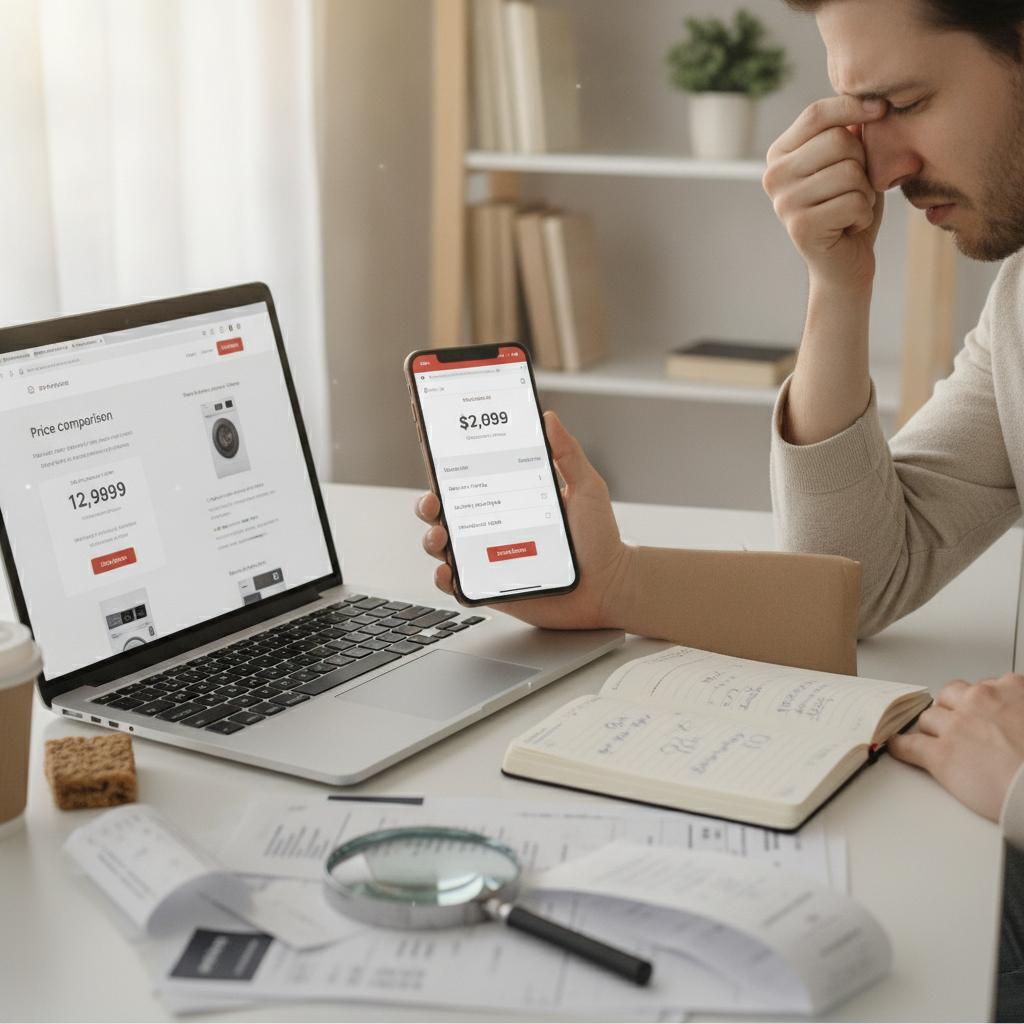
Price comparison tools have become a standard part of online shopping, yet the final amount charged at checkout is frequently higher than what those tools displayed. The gap between the advertised price and the actual cost is rarely accidental — it's structural. Understanding how these tools work, and where they fall short, gives shoppers a meaningful advantage before they click "buy."
How Do Price Comparison Tools Actually Work?
Most price comparison platforms — including Google Shopping, PriceGrabber, and Honey — pull listed prices directly from retailer product feeds. These feeds are submitted by merchants and typically reflect only the base item cost. The tools are designed for speed and breadth, not depth. They index thousands of products across hundreds of retailers simultaneously, which means they're working from snapshots rather than live checkout simulations. That limitation matters enormously, because the price a retailer feeds to an aggregator and the price a customer pays at the end of the checkout process are often two different numbers.
What Types of Fees Tend to Stay Hidden?
The charges that most commonly escape comparison tool detection fall into several consistent categories. Shipping fees are the most familiar offender, especially when minimum order thresholds for free delivery aren't met. But beyond shipping, retailers frequently add handling charges, service fees, or "convenience" surcharges that only appear late in checkout. Sales tax calculations vary by state and are rarely incorporated into comparison results. Subscription requirements — such as Instacart's or DoorDash's membership models — can also obscure the true per-item cost. On travel and ticketing platforms like Ticketmaster or Booking.com, booking fees and resort charges represent some of the most significant last-minute additions shoppers encounter.
Why Do Retailers Structure Pricing This Way?
Retailers benefit from showing the lowest possible number at the point of discovery. A lower headline price improves a product's ranking in comparison tools, drives click-through traffic, and leverages a well-documented behavioral tendency: shoppers who have already invested time in a purchase decision are less likely to abandon it over fees that appear later. This isn't unique to smaller merchants — major platforms structure checkout flows deliberately, revealing the full cost incrementally. The practice is legal, widely used, and effective enough that it has persisted despite growing consumer awareness.
Where Do Comparison Tools Have the Most Blind Spots?
Electronics retailers, marketplace platforms like Amazon and Walmart Marketplace, and subscription-based services tend to generate the most significant discrepancies between comparison prices and checkout totals. On marketplace platforms specifically, third-party sellers can list a product at an attractive base price while applying separate shipping costs that third-party aggregators may not capture accurately. Extended warranties offered during checkout add further to the total in ways that are invisible at the research stage. International retailers present additional complications, since currency conversion fees, customs duties, and import charges are almost never reflected in the comparison price shown to domestic shoppers.
How Can Shoppers Consistently Close the Gap?
The most effective approach is to treat the comparison tool as a starting point rather than a final verdict. Before committing to any purchase you've researched through a comparison platform, take these steps:
1. Add the item to the retailer's cart and proceed to checkout without finalizing payment — most retailers display the full cost including tax and shipping at that stage. 2. Compare that cart total across at least two or three retailers, not just the listed price. 3. Check whether a retailer requires a paid membership to access the advertised rate. 4. For large purchases, search the retailer's name alongside "hidden fees" or "checkout fees" to surface recent buyer experiences. 5. Use a browser extension like Capital One Shopping alongside comparison tools, since these run checkout simulations more accurately than feed-based aggregators. 6. For travel bookings, always check the total displayed on the final review page before entering payment details, and compare that against booking directly with the hotel or airline.
Building this habit takes an extra few minutes per purchase, but the savings — especially on electronics, travel, and subscription-based services — are typically worth the time.
Where Is This Area of Retail Heading?
Regulatory pressure on hidden fees has grown noticeably in recent years. In the United States, the Federal Trade Commission has moved to formalize rules around "junk fees" across multiple industries, and several states have enacted or are considering laws that require all-in pricing to be displayed earlier in the checkout flow. As these regulations take effect, comparison tools will likely be pushed to reflect more complete pricing. Some aggregators are already experimenting with checkout-stage integrations that capture taxes and shipping in real time. The gap between listed and final price won't disappear entirely, but shoppers who understand how these systems currently work — and who verify totals at the cart stage — will consistently make better-informed decisions regardless of how the technology evolves.